
Right Bank vs. Left Bank: Two Lifestyles, Two Distinct Markets
23 avril 2026 · Sarah & Sabine
Paris sits at the centre of one of the most consequential real estate decisions a buyer can face: which side of the Seine to choose. The question of Left Bank versus Right Bank is not merely geographic, it is a structural choice that will shape your daily life, your asset’s liquidity, your rental yield and your long-term capital appreciation trajectory. Every year, thousands of international buyers arrive in Paris with a budget, a vision, and a fundamental misunderstanding of what separates these two worlds.
At Maison Arboris, we work exclusively with buyers, not sellers. Our role is to decode what the market actually tells us, strip away the mythology, and help you match the right arrondissement to your real objectives. This analysis is built on 2026 market data, direct transaction intelligence, and years of accompanying clients from the US, the Gulf, and the UK through Parisian acquisitions.
The short answer to “Left Bank or Right Bank?” is: it depends entirely on who you are and what you are optimizing for. The long answer follows.
Table of Contents
- What “Left Bank” Really Means for a Buyer
- What “Right Bank” Really Means for a Buyer
- Price Comparison: Left Bank vs Right Bank in 2026
- The Match by Buyer Profile
- Daily Life and Living Environment
- Transport and Accessibility
- Property Types and Housing Stock
- Communities, Networks and Schools
- Beyond the Seine: What the Debate Really Hides
- How to Make Your Choice: Method and Checklist
What “Left Bank” Really Means for a Buyer
The DNA of the Left Bank
The Left Bank, or Rive Gauche, carries one of the most powerful place-myths in global real estate. Hemingway, Sartre, Sciences Po, the Sorbonne, the Musée d’Orsay. The emotional charge is real, and it is also a pricing mechanism. Buyers from New York, London and Riyadh often arrive pre-sold on the Left Bank before they have seen a single property.
What this myth conceals is a precise architectural and demographic reality. The core Left Bank arrondissements, the 5th, 6th, 7th, 13th, 14th and 15th, each carry entirely different market dynamics. The 6th and 7th are among the most expensive square metres in metropolitan France. The 13th and 15th, separated by only a few streets from these gilded zones, offer a substantially different value proposition. Understanding this internal geography is essential before any budget allocation.
The Left Bank’s defining characteristics for a buyer:
- Stone and history: Haussmannian buildings, pre-Haussmann structures, and medieval layouts define the northern corridors of the 5th and 6th arrondissements
- Academic and institutional density: The concentration of universities, ministries and cultural institutions creates a stable, educated residential demand base
- Quieter street rhythm: Compared to the commercial corridors of the Right Bank, residential streets on the Left Bank tend to be calmer, particularly in the 7th
- High prestige, lower yield: The flip side of desirability is price compression on rental yields, which we address in detail below
The Left Bank Arrondissements and Their Markets in 2026
The 6th arrondissement (Saint-Germain-des-Prés) remains the most coveted address on the Left Bank. Supply is structurally constrained, turnover is low, and buyers are often competing not on price but on speed and relationship networks. This is precisely where an off-market search becomes not a luxury but a necessity.
The 7th arrondissement (Invalides, Eiffel Tower) sits at the intersection of residential prestige and institutional stability. Ministries, embassies and old Parisian family fortunes define the social fabric. The market is discreet and slow-moving, with few properties reaching public portals.
The 5th arrondissement (Latin Quarter) is increasingly a target for international buyers seeking a Parisian foothold at slightly lower entry points than the 6th, with strong short-term rental demand linked to academic tourism and the university calendar.
The 15th arrondissement is the largest in Paris by population. It functions as the Left Bank’s most pragmatic zone, solid Haussmannian stock, good transport links, and real price accessibility compared to its prestigious neighbours. For a buyer optimizing surface area per euro spent, it deserves serious consideration.
Real Limits of the Left Bank
The Left Bank offers very little in terms of new construction. If you are seeking a contemporary apartment with modern thermal insulation, underfloor heating or an elevator in a small building, your options are severely limited. The renovation cost embedded in many Left Bank properties is significant and often underestimated by international buyers unfamiliar with French co-ownership structures (copropriétés).
Parking is structurally scarce. The Left Bank’s medieval street grid was not designed for automobiles, and if a car is part of your lifestyle, factor parking costs (often €25,000 to €50,000 for a dedicated space in the 6th or 7th) into your total acquisition budget.
What “Right Bank” Really Means for a Buyer
The DNA of the Right Bank
The Rive Droite is not one market but a mosaic of micro-markets, each with distinct buyer profiles, pricing logics and lifestyle propositions. The Right Bank houses the most expensive street in France (Avenue Montaigne), the most gentrified working-class neighbourhood (Oberkampf), and some of the city’s most ambitious urban redevelopment zones (Batignolles, Paris Nord-Est corridor).
Where the Left Bank signals literary heritage and institutional gravitas, the Right Bank signals commercial energy, architectural eclecticism and a wider demographic range. For a buyer from London’s financial districts or from Dubai’s business community, the Right Bank often feels instinctively more legible.
Major Right Bank Poles and Their Real Estate Profiles in 2026
The 8th arrondissement (Golden Triangle, Champs-Élysées) occupies the apex of Right Bank prestige. Haussmmannian apartments with formal reception rooms, floor-to-ceiling windows and concierge-attended buildings dominate. Pricing here competes directly with the 6th and 7th on the Left Bank.
The 16th arrondissement (Passy, Auteuil, Trocadéro) is the traditional anchor of bourgeois Parisian family life. Large floor plans, proximity to the Bois de Boulogne, the Lycée Janson-de-Sailly, and a residential calm that rivals the 7th. It remains underpriced relative to its quality of life offering, a point Sabine flags consistently in our market briefings.
The 2nd and 3rd arrondissements (Sentier, Le Marais) have undergone profound transformation over the past decade. The Marais in particular has moved from countercultural enclave to a highly liquid, internationally traded market. Small surfaces command premium prices, and the buyer profile skews younger and more international.
The 17th, 18th and 19th arrondissements represent the Right Bank’s most accessible entry points for buyers with tighter budgets, and simultaneously its highest-yield zones for locative investment. The Batignolles sector of the 17th has benefited from the completion of Cité Judiciaire and ongoing urban densification.
Real Limits of the Right Bank
Not all of the Right Bank has aged gracefully. The 20th arrondissement and parts of the 19th still carry significant urban renewal deficits. Some of the large 1970s social housing estates (grand ensembles) depress surrounding value and create micro-markets that can trap buyers expecting citywide price appreciation dynamics.
The Right Bank’s commercial vitality, celebrated as an asset, can become a liability for residents seeking quiet. Major axes like the Rue de Rivoli, Avenue de l’Opéra and the grands boulevards generate noise levels that directly affect the livability of ground-floor and first-floor units.
Price Comparison: Left Bank vs Right Bank in 2026
The data below synthesizes transaction records from the DVF (Demandes de Valeurs Foncières), notarial averages and our own transaction intelligence gathered through Q1 2026. Ranges reflect the spread between distressed sales and premium addresses within each arrondissement.
| Arrondissement | Side | Avg. Price/m² (€) | Low/High Range (€/m²) | 2024-2026 Trend | Market Tension |
|---|---|---|---|---|---|
| 6th (Saint-Germain) | Left | 17,500 | 13,000 / 25,000+ | Stable / slight +1.5% | Very High |
| 7th (Invalides) | Left | 15,800 | 12,000 / 22,000 | Stable | High |
| 5th (Latin Quarter) | Left | 13,500 | 10,500 / 18,000 | +2.1% | High |
| 15th | Left | 10,200 | 8,500 / 13,000 | Flat | Moderate |
| 14th (Montparnasse) | Left | 10,800 | 8,800 / 13,500 | +1.2% | Moderate |
| 13th | Left | 9,400 | 7,800 / 11,500 | Flat | Moderate |
| 8th (Golden Triangle) | Right | 16,200 | 12,000 / 28,000 | Stable | High |
| 16th | Right | 11,500 | 9,000 / 17,500 | Flat / -0.5% | Moderate |
| 3rd / 4th (Marais) | Right | 13,800 | 11,000 / 20,000 | +2.8% | High |
| 2nd (Sentier) | Right | 12,200 | 9,500 / 15,000 | +3.1% | High |
| 17th (Batignolles) | Right | 10,500 | 8,500 / 13,500 | +2.4% | Moderate-High |
| 9th (Opéra / Pigalle) | Right | 11,800 | 9,500 / 14,500 | +2.0% | Moderate-High |
| 10th (Canal St-Martin) | Right | 10,400 | 8,200 / 12,500 | +1.8% | Moderate |
| 19th / 20th | Right | 8,200 | 6,500 / 10,500 | Flat | Low-Moderate |
Key reading of this data: The persistent myth that the Left Bank is categorically more expensive than the Right Bank is exactly that, a myth. The 6th and 7th do trade at premium levels, but the 15th, 13th and 14th are entirely comparable to, or cheaper than, swaths of the Right Bank. Conversely, the 8th arrondissement and the finest addresses in the 16th compete with Left Bank prestige pricing.
The strongest price momentum in 2025-2026 is concentrated on the Right Bank, specifically in the 2nd, 3rd, 9th and 17th arrondissements, driven by a combination of younger buyer demographics, improved transport links and the ongoing migration of creative and tech professionals toward central-Right-Bank locations.
The Match by Buyer Profile
The Couple in Their Thirties Without Children
For this profile, the Left Bank’s 5th and the Right Bank’s 9th or 2nd arrondissements represent the sharpest value. The priority matrix typically includes walkability, cultural density, café and restaurant quality, and a medium-term appreciation upside. On both sides, properties in the 55m² to 85m² range with exposed beams or period detail command a premium that the market consistently supports at resale.
The Family with Children
This is where the analysis becomes genuinely Left Bank-leaning. The concentration of Grandes Écoles preparatory classes, prestigious lycées, and the French educational elite runs through the 6th, 7th and 5th on the Left Bank, and the 16th on the Right Bank. For families prioritizing educational infrastructure within walking distance of home, the 7th and 16th present the two strongest cases.
Space-per-euro calculations almost always favor the 15th on the Left or the 16th on the Right. A family needing 120m² or more will find these two arrondissements deliver the best compromise between price, surface, educational proximity and green space (Bois de Boulogne for the 16th, Parc Georges Brassens and Parc André Citroën for the 15th).
The Locative Investor
Sabine’s view on this is clear and data-supported: the Left Bank’s prestige does not translate into yield. Gross rental yields in the 6th and 7th hover between 2.2% and 2.8%, levels at which the investment logic becomes purely patrimonial rather than income-driven. If yield is your primary metric, the Right Bank’s 9th, 10th and 2nd arrondissements consistently deliver gross yields between 3.5% and 4.5% on small to mid-size surfaces, with tenant demand driven by the concentration of start-ups, media companies and young professionals.
The 5th arrondissement occupies an interesting middle ground. Its proximity to major universities generates structural short-term rental demand (for furnished student and academic lets), which can push effective yields above those achievable through standard unfurnished leases.
Buyers exploring rental structuring should also review our analysis of ownership structures in France, as the choice between personal name acquisition and an SCI (a French transparent property holding company) has direct fiscal implications for non-resident locative investors.
The Expatriate or Bi-Resident
For buyers whose primary residence is in London, New York, Dubai or Singapore, and who are purchasing a Paris pied-à-terre, the Right Bank often wins on pure logistics. The 8th and 16th arrondissements sit within natural orbit of the major international hotels, private club networks, and the business infrastructure that accompanies frequent professional travel. The proximity to Gare de Lyon (Right Bank) and Gare du Nord (Right Bank) is a structural advantage for those using Paris as a European hub.
That said, American and Gulf buyers with deep cultural affinities for the Left Bank’s mythography often maintain a genuine preference for the 6th or 7th, and this emotional attachment has historically supported asset values in those arrondissements in ways that purely quantitative analysis cannot fully capture.
The First-Time Buyer
For a primo-accédant with a budget below €500,000, the honest answer is that large portions of both banks are inaccessible for anything above a studio. The viable zones at this budget include: the 13th and 14th on the Left (40-55m² studios and 2-room apartments), and the 10th, 11th and 19th on the Right (comparable surfaces with slightly better transport connectivity). Capital appreciation potential is stronger in the 10th and 11th based on current trajectory data, but renovation risk is also higher given the age and maintenance state of much of the building stock.
Daily Life and Living Environment
Cultural Offer
Both banks are extraordinarily rich, but they are rich in different registers. The Left Bank concentrates world-class institutions: the Musée d’Orsay, the Rodin Museum, the Musée du Quai Branly, the Odéon-Théâtre de l’Europe. The Right Bank counters with the Louvre, Centre Pompidou, the Palais de Tokyo, the Opéra Garnier and the emerging Bourse de Commerce. In practice, neither bank has a cultural deficit. The difference is tone: the Left Bank feels academic and curated; the Right Bank feels kinetic and diverse.
Parks and Green Space
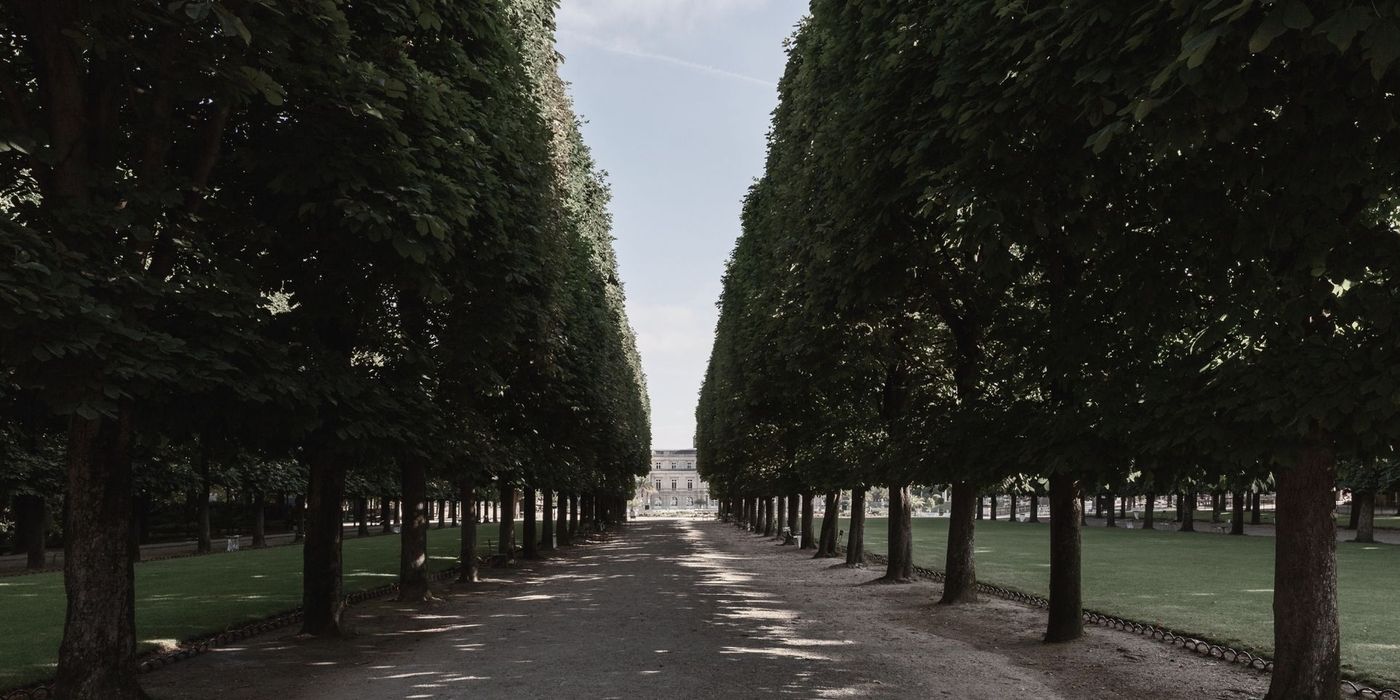
The Left Bank’s flagship green spaces include the Jardin du Luxembourg (by far the most beloved park in the city for many residents), the Jardin des Plantes and the Promenade Plantée. The Right Bank counters with the Bois de Boulogne (the largest parkland in Paris), the Parc des Buttes-Chaumont, and the Parc Monceau. Families with young children consistently rank the Luxembourg and Monceau as the city’s most functional parks for daily use.
Restaurant, Shopping and Nightlife
The Right Bank, particularly the 2nd, 3rd, 9th and 11th arrondissements, has decisively overtaken the Left Bank in culinary innovation over the past decade. The neo-bistro movement, natural wine bars, and the concentration of Michelin-starred creativity in the 10th and 11th represents a genuine shift in the gastronomic center of gravity. The Left Bank’s dining scene remains prestigious and consistent, but for buyers who prize restaurant proximity and nightlife access, the Right Bank wins on breadth and energy.
Transport and Accessibility
Metro, RER and Bus Coverage
Overall metro density is broadly comparable across both banks, with slight advantages favoring the Right Bank in terms of the number of distinct lines and interchange nodes. The RER A and B, both of which cross Paris from east to west and north to south, provide the backbone of rapid transit access. RER B serves the Left Bank extensively (Saint-Michel, Luxembourg, Port-Royal, Denfert-Rochereau) and connects directly to CDG airport, which is a genuine practical advantage for bi-residents using Paris as a European base.
The Right Bank’s Gare du Nord (Eurostar, Thalys) and Gare de Lyon (TGV to Lyon, Marseille, Geneva) make the Right Bank structurally superior for buyers whose lives involve frequent domestic or European rail travel.
Cycling and Walkability
Both banks score highly on walkability within their respective dense cores. The Vélib’ bike-share network operates symmetrically. However, the topography of the Left Bank, particularly the gentle gradients around Montparnasse and the Montagne Sainte-Geneviève, does introduce minor cycling friction that flat Right Bank corridors do not.
Transport’s Impact on Property Value
Proximity to a direct RER or major metro line adds a measurable premium of 5% to 12% to comparable properties, according to notarial transaction analysis. In the context of Left Bank vs Right Bank, this means that a well-served address in the 13th or 15th (Left Bank, good RER coverage) can outperform a poorly-served address in the 16th or 17th (Right Bank) on both yield and liquidity at resale.
Property Types and Housing Stock
The character of the available stock differs meaningfully between the two banks, and this has direct implications for renovation budgets and co-ownership management.
Left Bank typical stock:
- Pre-Haussmannian stone buildings (17th-18th century, especially 5th and 6th)
- Classic Haussmannian blocks (1860-1900, across all prestige arrondissements)
- Post-war functional construction (13th, 14th, 15th), often in better thermal condition
- Very limited new construction or VEFA (Vente en l’État Futur d’Achèvement, i.e. off-plan) opportunities
Right Bank typical stock:
- Belle Époque and Art Nouveau buildings (8th, 16th, 17th)
- Classic Haussmannian (1st, 2nd, 8th, 9th)
- Industrial reconversion lofts (10th, 11th, 19th)
- Modern programs and VEFA, particularly in the 17th (Batignolles) and 13th extended area near the BnF
- Renovated bourgeois apartments in the Marais (3rd, 4th) with modern interiors behind historic facades
For buyers requiring modern thermal performance, elevator access, or contemporary kitchen and bathroom finishes without a major renovation program, the Right Bank currently offers more viable options, particularly in new or recently renovated programs north of the 17th and in the Marais.
Communities, Networks and Schools
International Schools
The distribution of accredited international schools creates a genuine geographical tilt. The American School of Paris is located in Saint-Cloud, more accessible from the Right Bank’s western arrondissements and the 16th. The British School of Paris (Croissy-sur-Seine) and the Marymount International School (Neuilly-sur-Seine) similarly orbit the western Right Bank and its adjacent communes.
On the Left Bank, the École Active Bilingue and several bilingual options within the French national system serve families who want bilingual education within the city perimeter. The International School of Paris (16th arrondissement, positioned on the Right Bank boundary) serves both communities.
Expatriate Communities and Support Networks
The western Right Bank, specifically Neuilly-sur-Seine, the 16th and the 8th, has historically hosted the densest concentration of American and British expatriate families. The informal networks, English-speaking service providers, and community infrastructure (churches, sports clubs, networking events) are more developed in these zones.
The Left Bank hosts a more diffuse international community, often academically oriented (doctoral researchers, university faculty, think-tank professionals), which may align better with certain buyer profiles seeking intellectual rather than commercial network density.
Beyond the Seine: What the Debate Really Hides
The Real Division Is the Neighbourhood, Not the River
Sarah’s most frequent observation when onboarding new clients is this: buyers who arrive fixated on Left Bank or Right Bank as a binary choice are asking the wrong question. The genuine micro-market differentials within a single arrondissement can be larger than the differential between the average Left Bank and the average Right Bank price.
The difference between a south-facing apartment on the Place du Palais-Bourbon (7th) and a north-facing ground-floor unit three streets away is not a question of Left Bank prestige. It is a question of light, noise, floor level and co-ownership charges. These granular variables drive actual transaction prices far more than the bank identity.
The New Sectors to Watch in 2026: Grand Paris and Urban Mutations
The Grand Paris Express infrastructure program is the most significant structural event in Parisian real estate since the construction of the Périphérique. The new metro lines (Lines 15, 16, 17, 18) are creating value in previously neglected zones of Greater Paris, blurring the traditional boundaries of the Paris intra-muros market.
For buyers with a five-to-ten-year horizon, the zones immediately adjacent to new Grand Paris stations, including Saint-Denis Pleyel (north, Right Bank axis) and Cachan, Villejuif (south, Left Bank axis), are generating an entirely new market logic that the traditional rive gauche / rive droite framework simply cannot accommodate.
Should You Still Think in Left Bank / Right Bank Terms?
Our answer: use it as a rough cultural orientation tool, then immediately move to arrondissement-level and street-level analysis. The Left Bank / Right Bank binary is useful for capturing the cultural tone and social fabric of a residential choice. It is completely inadequate as a pricing model, a yield model, or a capital appreciation model. The data in our comparison table above illustrates exactly why.
How to Make Your Choice: Method and Checklist
Before committing to either bank, we recommend working through the following diagnostic questions:
- What is your hard budget ceiling, including all acquisition costs (notary fees of approximately 7-8% on old properties, agency fees if applicable, renovation reserves)?
- What is the intended use: primary residence, pied-à-terre, pure investment, or hybrid?
- What is your hold horizon: under five years requires high-liquidity arrondissements; over ten years allows for value-creation plays in emerging zones
- Do you need on-site parking, and have you budgeted for it as a separate line item?
- What is the target tenant profile if the property will be rented: student, professional, short-term tourist, diplomatic?
- How important is English-language service infrastructure (medical, legal, educational, social) to your household?
- Are you reliant on specific transport corridors (CDG airport, Eurostar at Gare du Nord, specific business districts)?
- What is your renovation tolerance and capability: hands-on project, managed renovation, or turnkey only?
- What is your fiscal residency status, and have you modelled the tax implications of French rental income under both resident and non-resident regimes?
- Have you physically spent time in shortlisted neighbourhoods, across different days and times, before making any commitment?
Define Your Non-Negotiable Criteria
Before viewing a single property, establish a ranked hierarchy of criteria. Distinguish between deal-breakers (must-haves) and preferences (nice-to-haves). This prevents the common error of being seduced by a beautiful apartment in the wrong zone, a mistake that is costly at resale.
Test Both Banks Before Committing
We consistently advise clients to rent short-term in two or three candidate arrondissements before purchasing. A week in the 7th and a week in the 9th will reveal more about your actual lifestyle preferences than any amount of desk research. The city presents itself differently at 7am on a Tuesday and at 11pm on a Friday.
Work with the Right Advisors
A transaction of this magnitude in a market as specific as Paris requires coordinated expertise. The minimum team for an international buyer includes: a buyer’s agent or property hunter who is legally bound to your interests (not the seller’s), a French notaire for the legal and fiscal structuring, and a tax advisor fluent in the intersection between French law and your home country’s tax regime. For non-residents particularly, the structuring of the acquisition, whether in personal name, through an SCI (Société Civile Immobilière, a transparent property holding vehicle), or through a more complex holding structure, has consequences that extend decades beyond the signing date.
Understanding the full costs before committing is equally essential. Many international buyers are surprised by the cumulative weight of acquisition taxes, agency commissions, notary fees and potential co-ownership arrears. A clear-eyed view of the real purchase costs in France before you sign anything will prevent the most common and expensive surprises.
The question of Left Bank vs Right Bank ultimately resolves into a more personal, more specific and more consequential question: what kind of Parisian life are you building, and which configuration of street, building, arrondissement and community will sustain it over the years ahead? That is the question Maison Arboris exists to help you answer.

Questions fréquentes
01Is it better to live on the Left Bank or Right Bank of Paris?
Is it better to live on the Left Bank or Right Bank of Paris?
Neither bank is universally better — it depends on your priorities. The Left Bank suits families valuing academic prestige and calm streets, while the Right Bank offers more commercial energy, transport hubs, and diverse housing stock. Budget, lifestyle, and intended use should drive your decision, not mythology.
02What is the best arrondissement in Paris for property investment?
What is the best arrondissement in Paris for property investment?
For rental yield, the 2nd, 9th, and 10th arrondissements deliver gross returns of 3.5–4.5%, outperforming prestigious Left Bank zones. For capital appreciation, the 2nd and 3rd show the strongest 2025–2026 momentum. For patrimonial value, the 6th and 7th remain structurally resilient despite lower yields.
03What is the difference between the Left Bank and Right Bank in Paris?
What is the difference between the Left Bank and Right Bank in Paris?
The Left Bank (Rive Gauche) is defined by academic institutions, historic stone buildings, and cultural gravitas, anchored by the 6th and 7th arrondissements. The Right Bank (Rive Droite) is more commercially dynamic, architecturally diverse, and home to major transport hubs, offering a wider range of buyer profiles and price points.
04Is the Left Bank of Paris more expensive than the Right Bank?
Is the Left Bank of Paris more expensive than the Right Bank?
Not categorically. The 6th and 7th arrondissements are among France's priciest, but the 13th, 14th, and 15th are comparable to or cheaper than many Right Bank zones. The 8th arrondissement rivals Left Bank prestige pricing. The strongest price growth in 2025–2026 is actually concentrated on the Right Bank.
05Which side of Paris is best for international families with children?
Which side of Paris is best for international families with children?
The 7th and 16th arrondissements are the top choices for international families, offering prestigious lycées, calm residential streets, and proximity to international schools. The 16th provides the best space-per-euro ratio with access to the Bois de Boulogne, while the 15th offers affordable alternatives with good green space and transport.