The DPE Energy Rating and Climate Law: How They Affect Property Value and Your Investment
25 avril 2026 · Sarah & Sabine
The French property market runs on paperwork, and few documents carry as much financial weight in 2026 as the DPE, the Diagnostic de Performance Énergétique. Whether you are purchasing a 17th-century château in the Dordogne, a Haussmannian apartment in Paris, or a working mas in Provence, the energy performance certificate attached to that property will directly influence its price, its liveability, and its long-term investment potential. For international buyers unfamiliar with French administrative requirements, understanding the DPE is not optional. It is foundational due diligence.
This guide is written from the perspective of property advisors who work exclusively on the buyer’s side. We have watched clients overpay for properties rated F or G, unaware that those ratings translate into mandatory renovation obligations, rental freezes, and measurable capital value discounts. We have also watched informed buyers negotiate significant reductions precisely because they understood what the diagnostician’s report meant. Knowledge of the DPE framework is, in our view, one of the most actionable tools available to any serious property investor in France.
Table of Contents
- What Is the DPE and Why It Matters for Your Investment
- How a DPE Is Carried Out
- Understanding the Two DPE Rating Labels
- DPE Validity, Legal Status, and Key Thresholds
- Major DPE Changes Effective January 1, 2026
- The DPE in Property Sales: What Sellers Must Disclose
- The DPE and Rental Properties: Critical Rules for Landlords
- Houses vs. Apartments: DPE Calculation Differences
- How the DPE Directly Affects Property Value
- Energy Renovation: Improving Your DPE Score
- Simulators, Tools, and Resources for 2026
- Practical Tips to Prepare for Your DPE Visit
- Key Takeaways: DPE France 2026 at a Glance
What Is the DPE and Why It Matters for Your Investment
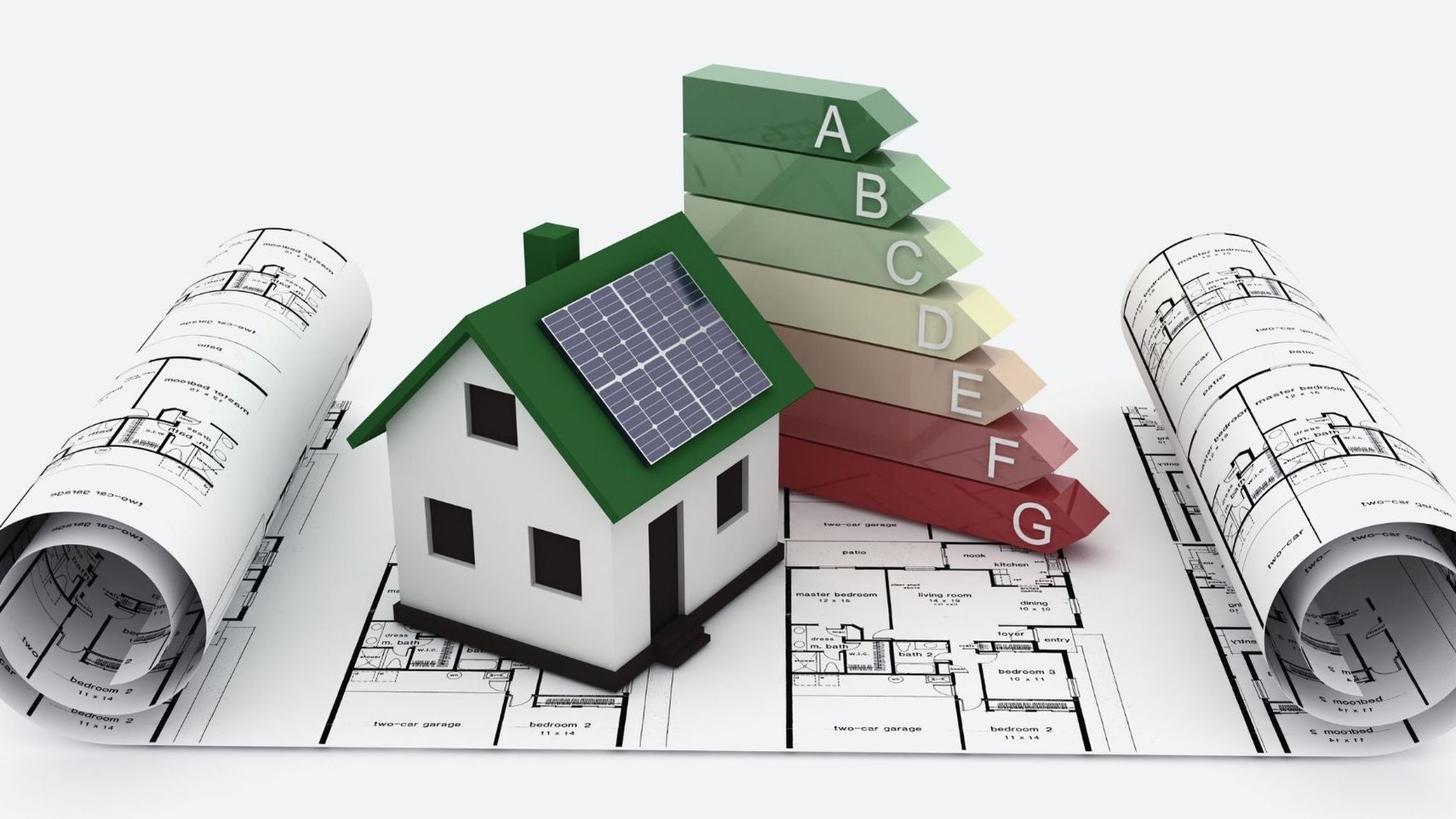
The Diagnostic de Performance Énergétique is the French mandatory energy performance certificate, broadly equivalent to the UK’s Energy Performance Certificate (EPC) or the Energy Star ratings system familiar to American buyers. It quantifies two things: how much energy a property consumes annually, and how much CO₂ it emits. The rating runs from A (most efficient) to G (least efficient) across both metrics.
The DPE was introduced in 2006 in response to the EU’s Energy Performance of Buildings Directive. Over the years, however, its methodology was inconsistently applied and widely criticised for producing unreliable results, particularly for older stone properties common in French rural and prestige markets. A landmark reform in July 2021 transformed the DPE from an indicative document into a legally binding certificate, meaning sellers and landlords can now be held liable for inaccurate ratings.
The primary purpose of the DPE is to support France’s broader energy transition agenda. The French government has set a target of eliminating all G-rated properties from the residential rental market by 2025, with F-rated properties following by 2028. These are not aspirational timelines. They carry legal teeth, and they affect investment returns in ways that every buyer must understand before signing a compromis de vente.
Any property that is not an off-plan construction, a heritage-listed monument with exempt status, or a structure used less than four months per year requires a DPE. It is the seller’s responsibility to commission the report, and it must be presented to any prospective buyer at the very first viewing stage for transactions, and at the point of advertising for rentals.
How a DPE Is Carried Out
Only certified diagnosticians accredited by an approved body (such as COFRAC or an equivalent certification organisation) may legally issue a DPE. You can verify any diagnostician’s credentials via the official government portal at qualifications.ademe.fr. Using an uncertified professional renders the DPE null and void.
The process typically involves a physical visit of two to four hours depending on property size, during which the diagnostician inspects:
- The building envelope (walls, roof, windows, insulation)
- Heating and hot water systems and their energy sources
- Ventilation and cooling systems
- Lighting installations in some building types
Since the 2021 reform, the calculation is now entirely based on physical characteristics of the building rather than actual energy bills, which had previously produced wildly inconsistent results depending on occupant behaviour. The diagnostician inputs data into a standardised software tool called 3CL (Calcul de la Consommation Conventionnelle des Logements), which models theoretical energy consumption.
The final DPE report contains the two rating labels, a description of the property’s energy systems, recommendations for improvement works with estimated costs, and a mandatory QR code that links to the ADEME national DPE database. This QR code allows anyone, including prospective buyers, to verify the certificate’s authenticity online.
Understanding the Two DPE Rating Labels
The DPE produces two separate colour-coded labels, both running from A to G. The final class assigned to a property is determined by whichever of the two is worse, a critical detail many buyers miss.
Label 1: Primary Energy Consumption, expressed in kWh/m²/year, measures the total annual energy consumed for heating, cooling, domestic hot water, ventilation, and lighting (where applicable).
Label 2: Greenhouse Gas Emissions, expressed in kg CO₂eq/m²/year, measures the carbon footprint associated with that energy consumption, which is why properties heated by gas or fuel oil are often penalised more heavily than electrically heated ones in the emissions label.
| DPE Class | Energy Consumption (kWh/m²/yr) | GHG Emissions (kg CO₂eq/m²/yr) | Typical Property Profile | Key Implication in 2026 |
|---|---|---|---|---|
| A | ≤ 70 | ≤ 6 | New builds, passive houses | Maximum rental value, no restrictions |
| B | 71 to 110 | 7 to 11 | Well-insulated modern properties | Strong market premium |
| C | 111 to 180 | 12 to 30 | Renovated properties with good systems | No restrictions, solid marketability |
| D | 181 to 250 | 31 to 50 | Average French stock, 1970s to 1990s | No restrictions, median market |
| E | 251 to 330 | 51 to 70 | Older properties, partial insulation | No restrictions currently |
| F | 331 to 420 | 71 to 100 | Pre-war stone properties, uninsulated | Rental freeze from January 2028 |
| G | > 420 | > 100 | Extremely inefficient, old boilers | Rental ban already active (2025) |
The dual-label system means a property with excellent insulation but a heavy fuel-oil boiler could still receive an F or G classification on the emissions label alone. This is a common scenario in traditional French country properties and one that often surprises buyers coming from markets where only one energy metric is assessed.
DPE Validity, Legal Status, and Key Thresholds
Since the July 2021 reform, the DPE is legally binding, meaning the rating can form the basis of legal claims if it is found to be materially inaccurate. A buyer who purchases a property relying on a DPE that turns out to be significantly wrong may pursue the seller or the diagnostician for damages.
The standard validity period for a DPE issued after July 1, 2021 is 10 years, provided no significant energy-related works have been carried out in the interim. However, transitional provisions applied to older DPEs, which are now fully expired:
| DPE Date of Issue | Original Validity | Extended Deadline | Status in 2026 |
|---|---|---|---|
| Before December 31, 2017 | 10 years | December 31, 2022 | Fully expired, must be renewed |
| January 1, 2018 to June 30, 2021 | 10 years | December 31, 2024 | Fully expired, must be renewed |
| From July 1, 2021 onwards | 10 years | Standard expiry applies | Valid until year of issue + 10 |
In practical terms, any DPE issued before July 2021 is now expired and legally unusable for property transactions or rental advertisements. If you encounter a pre-2021 DPE attached to a property being sold or let today, this is not simply an administrative oversight. It is a legal non-compliance that should prompt immediate scrutiny of the broader transaction.
Major DPE Changes Effective January 1, 2026
The 2026 reforms represent the most significant adjustment to the DPE framework since the July 2021 overhaul. Several categories of property have seen their calculation methodology updated, with direct consequences for ratings and market values.
Electrically heated homes were historically penalised by a primary energy conversion factor of 2.3, meaning each kWh of electricity consumed was counted as 2.3 kWh of primary energy. France has adjusted this factor downward in recognition of the increasing share of nuclear and renewable electricity in the French grid, which benefits properties relying on electric heating or heat pumps.
Small properties under 40 m² now benefit from corrected thresholds. Previous methodology produced systematically inflated energy consumption figures per square metre for studios and small apartments, pushing many small Parisian flats into F and G categories that did not accurately reflect their actual performance. The 2026 recalibration corrects this distortion, which has meaningful implications for the Parisian pied-à-terre market popular with international buyers.
F and G rated properties face tightened enforcement. Any property whose rating changes to G under the new 2026 calculation becomes immediately subject to the rental restrictions that applied to properties already classified G before January 2025. This is a structural shift that will push a portion of properties currently rated E or F into the restricted category, with corresponding effects on rental yields and capital values.
If you are in the process of buying a property with a DPE issued in late 2024 or early 2025, it is worth requesting a preliminary assessment under the 2026 methodology before committing to a price, particularly for electrically heated properties and small apartments, where the recalculation may significantly improve or worsen the rating.
The DPE in Property Sales: What Sellers Must Disclose
The DPE forms part of the Dossier de Diagnostic Technique (DDT), the complete bundle of mandatory property surveys that must be compiled by the seller before a sale can proceed. A buyer conducting thorough due diligence should treat the DDT as essential reading, not background documentation.
Other surveys in the DDT include asbestos reports, lead paint diagnostics, electrical and gas installation certificates, natural risk assessments, and flood zone declarations. However, the DPE is the only document in the DDT that directly speaks to long-term operating costs and investment viability.
For private sales (between individuals without an agent), the DPE obligations are identical to publicly marketed sales. Sellers cannot legally omit the DPE regardless of the transaction structure.
The primary exemptions from DPE requirements include:
- Buildings used less than four months per year (certain holiday properties)
- Agricultural buildings, workshops, and industrial premises
- Standalone structures under 50 m² of useful floor area
- Buildings officially listed as historical monuments where works are structurally restricted
These exemptions do not apply to most prestige residential properties. A château that is a listed historical monument (Monument Historique) may be exempt, but this is relatively rare and must be formally verified through the Ministry of Culture’s records.
The DPE and Rental Properties: Critical Rules for Landlords
The intersection of the DPE and the rental market is where the financial consequences become most acute. France’s Loi Climat et Résilience has established a progressive phased ban on renting out energy-inefficient properties:
- Since August 2022: Landlords of G-rated properties may not increase rents between tenancies.

- Since January 1, 2025: New rental contracts for properties rated G are prohibited in mainland France.
- From January 1, 2028: New rental contracts for properties rated F will be prohibited.
- From January 1, 2034: New rental contracts for properties rated E will be prohibited.
Properties rated F or G are also subject to a mandatory energy audit (audit énergétique) when sold. This is distinct from the DPE and is a more comprehensive document that models multiple renovation pathways with detailed cost estimates. The energy audit is required in addition to the DPE, not as a replacement.
For investors purchasing properties with rental income as part of their return thesis, understanding this timeline is not optional. A property rated F today may legally be rented until 2028, but the market will price the renovation risk ahead of that deadline. Tenants will be harder to retain, rents will be compressed, and the eventual renovation cost will function as a deferred liability on the investment.
Houses vs. Apartments: DPE Calculation Differences
The DPE methodology applies differently to individual houses and apartments, and this distinction is particularly relevant in the French prestige market where both asset types feature prominently.
For individual houses, a standalone DPE is always required, assessing the property entirely on its own merits: its insulation, its heating system, its glazing, and its roof.
For apartments, two types of DPE exist. The DPE individuel assesses the specific apartment based on its own characteristics. The DPE immeuble (collective building DPE) assesses the entire building as a whole, and where a collective DPE exists for a building constructed before 2013, individual apartment owners may use it in place of an individual certificate. The practical implication: an apartment in a poorly insulated Haussmannian building with shared heating may carry a worse DPE than its individual characteristics would suggest, because the building’s collective systems dominate the calculation.
For buyers of apartments in Paris, understanding this distinction is crucial. A well-appointed flat on the Boulevard Saint-Germain may be impeccably renovated internally but still carry a D or E rating because the building’s shared boiler or uninsulated common walls drag the figure down.
How the DPE Directly Affects Property Value
This is the section that most directly answers the investment question at the heart of this guide. The data is now sufficiently robust to draw clear conclusions.
Studies published by the Observatoire du Financement des Marchés Résidentiels and cross-referenced against Demandes de Valeurs Foncières (DVF) transaction data consistently show the following pattern for equivalent properties in comparable locations:
- Properties rated A or B command a premium of 6% to 14% over D-rated equivalents
- Properties rated F trade at a discount of 4% to 11% below D-rated equivalents
- Properties rated G trade at a discount of 10% to 19% below D-rated equivalents, and this discount is widening as enforcement deadlines approach
These are market averages and vary significantly by geography. In tight urban markets like Paris, buyers have historically accepted poor DPE ratings because scarcity overcame efficiency concerns. That dynamic is shifting as rental bans and renovation mandates become real constraints rather than theoretical ones.
The real cost of buying a G-rated property extends well beyond the purchase price discount. Factor in mandatory audit costs, renovation estimates that routinely reach €400 to €800 per m² for deep energy retrofits, lost rental income during works, and the carrying cost of financing during a renovation period, and the apparent discount can evaporate entirely.
Energy Renovation: Improving Your DPE Score
The works that move the DPE needle most significantly, in descending order of typical impact, are:
- Roof and attic insulation: Often the single highest-impact measure, correcting the primary source of heat loss in older French properties
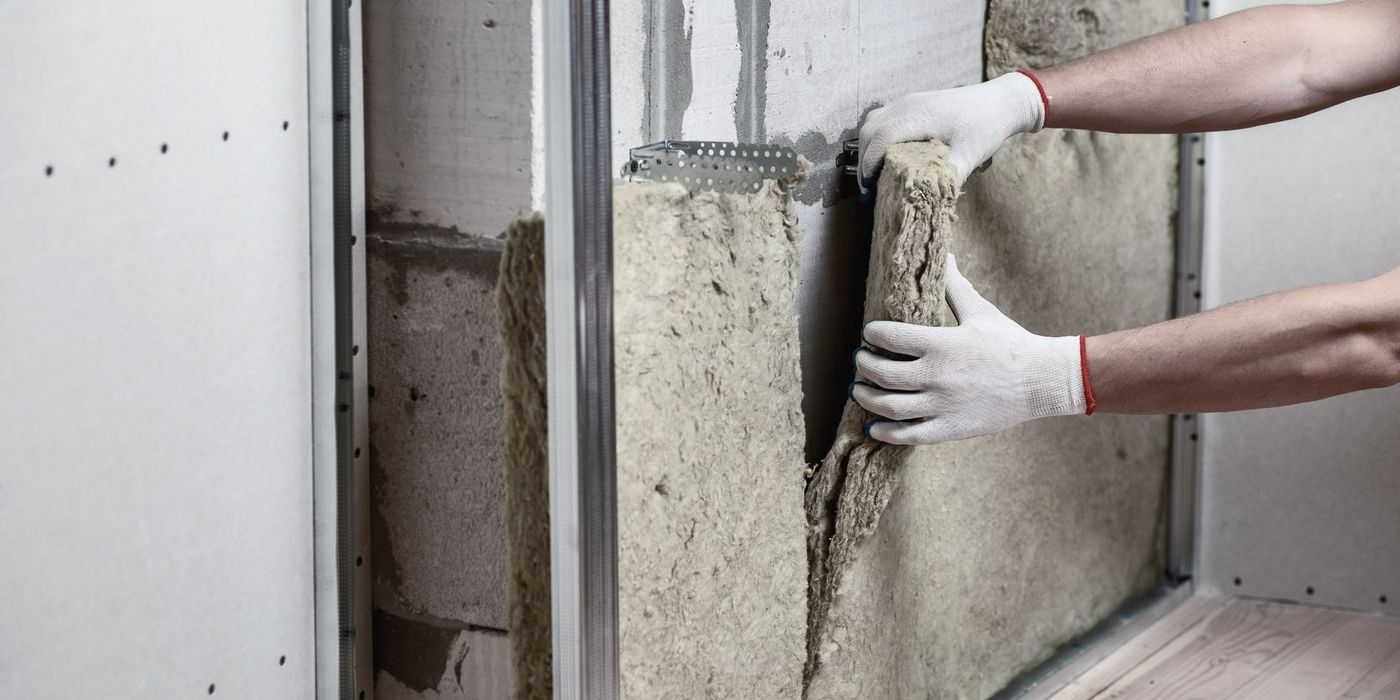
- Wall insulation (internal or external): Critical for stone-built rural properties but complex in listed buildings
- Replacing oil or gas boilers with heat pumps: Dramatically improves the emissions label and often the energy label
- Double or triple glazing installation: Moderate impact but essential in conjunction with other measures
- Mechanical ventilation with heat recovery (VMC double flux): Required for airtight renovations
France’s state renovation support scheme, MaPrimeRénov’, provides financial assistance for qualified works, with grant amounts varying by household income bracket and work type. For non-resident owners, eligibility depends on property usage and ownership structure, and we strongly advise verifying this through a qualified French tax advisor before budgeting renovation costs.
Simulators, Tools, and Resources for 2026
Several official and semi-official tools are available to estimate a DPE rating before commissioning a formal report:
- France Rénov’ simulator (france-renov.gouv.fr): Provides renovation pathway estimates and financial aid simulations
- ADEME DPE database (observatoire-dpe-audit.ademe.fr): Searchable national registry of all registered DPEs
- Quali-diagnostics.fr and COFRAC website: For verifying diagnostician certifications
These simulators are indicative tools, not replacements for a formal DPE. They are most useful in the early stages of acquisition analysis, before commissioning multiple surveys on properties that may not proceed to purchase.
Practical Tips to Prepare for Your DPE Visit
For sellers and buyers commissioning a DPE, preparation significantly affects both the accuracy and the outcome of the assessment.
Documents to gather before the diagnostician arrives:
- Construction permits and year of construction certificate
- Invoices for insulation works, window replacements, or boiler upgrades
- Heating system technical sheets and maintenance records
- Co-ownership (copropriété) building regulations if applicable
- Any previous DPE reports for reference
Common mistakes that lead to worse ratings:
- Failing to disclose recent insulation works because invoices cannot be found
- An unserviced boiler that underperforms its nominal specifications
- Missing documentation on double-glazing installation dates
If you receive a DPE that seems inconsistent with the property’s characteristics, you have the right to commission a second opinion from a different certified diagnostician. The DPE is legally binding, but it is not infallible, and in significant transactions, a second assessment is a reasonable due diligence cost.
Key Takeaways: DPE France 2026 at a Glance
For buyers:
- Always request the DPE at the first viewing, before entering any negotiation
- Use the rating as a negotiation lever, particularly for F and G properties
- Factor renovation costs and rental restriction timelines into your total investment model
- Verify the DPE was issued after July 2021, otherwise it is legally expired
For sellers:
- Commission the DPE early in the marketing process to avoid delays
- Any renovation works completed should be fully documented before the diagnostician visits
- A G or F rating is now a quantifiable price drag that renovation may offset more cost-effectively than discounting
For landlords:
- G-rated properties cannot be rented under new contracts from January 2025
- F-rated properties face the same restriction from January 2028
- Begin renovation planning now: waiting until 2027 to address an F-rated property will mean competing for contractors in an overloaded market
- The mandatory energy audit required for F and G properties in sales is a separate and more detailed document than the DPE itself
The DPE is no longer administrative background noise in French property transactions. In 2026, it is a direct determinant of rental legality, sale price, financing eligibility, and long-term investment return. Treating it as such, from the first moment of property analysis rather than as a closing formality, is the difference between an informed acquisition and an expensive one.
Questions fréquentes
01What does DPE mean in France?
What does DPE mean in France?
DPE stands for Diagnostic de Performance Énergétique, France's mandatory energy performance certificate. It rates a property from A (most efficient) to G (least efficient) across two metrics: annual primary energy consumption in kWh/m²/year and greenhouse gas emissions in kg CO₂eq/m²/year.
02How much does a DPE cost in France?
How much does a DPE cost in France?
A DPE in France typically costs between €100 and €250 for a standard apartment, rising to €150–€400 for a larger house, depending on property size and region. The seller commissions and pays for it. Using an uncertified diagnostician renders the certificate legally void and unusable in transactions.
03How long is a DPE valid for in France?
How long is a DPE valid for in France?
A DPE issued from July 1, 2021 onwards is valid for 10 years, provided no significant energy works are carried out in the interim. All DPEs issued before July 2021 are now fully expired and legally unusable for property sales or rental advertisements in 2026, regardless of their original issue date.
04Can a landlord still rent out a G-rated property in France in 2026?
Can a landlord still rent out a G-rated property in France in 2026?
No. Since January 1, 2025, new rental contracts for G-rated properties are prohibited in mainland France. Existing contracts may continue, but no new tenancies can legally commence. F-rated properties face the same restriction from January 2028, making renovation planning an urgent financial priority for landlords holding inefficient stock.
05How does the DPE rating affect property value in France?
How does the DPE rating affect property value in France?
A-to-B rated properties command a 6–14% price premium over D-rated equivalents, while G-rated properties trade at discounts of 10–19% and widening as enforcement deadlines near. Beyond purchase price, F and G properties carry renovation liabilities, rental income losses, and mandatory energy audit costs that can eliminate the apparent acquisition discount entirely.