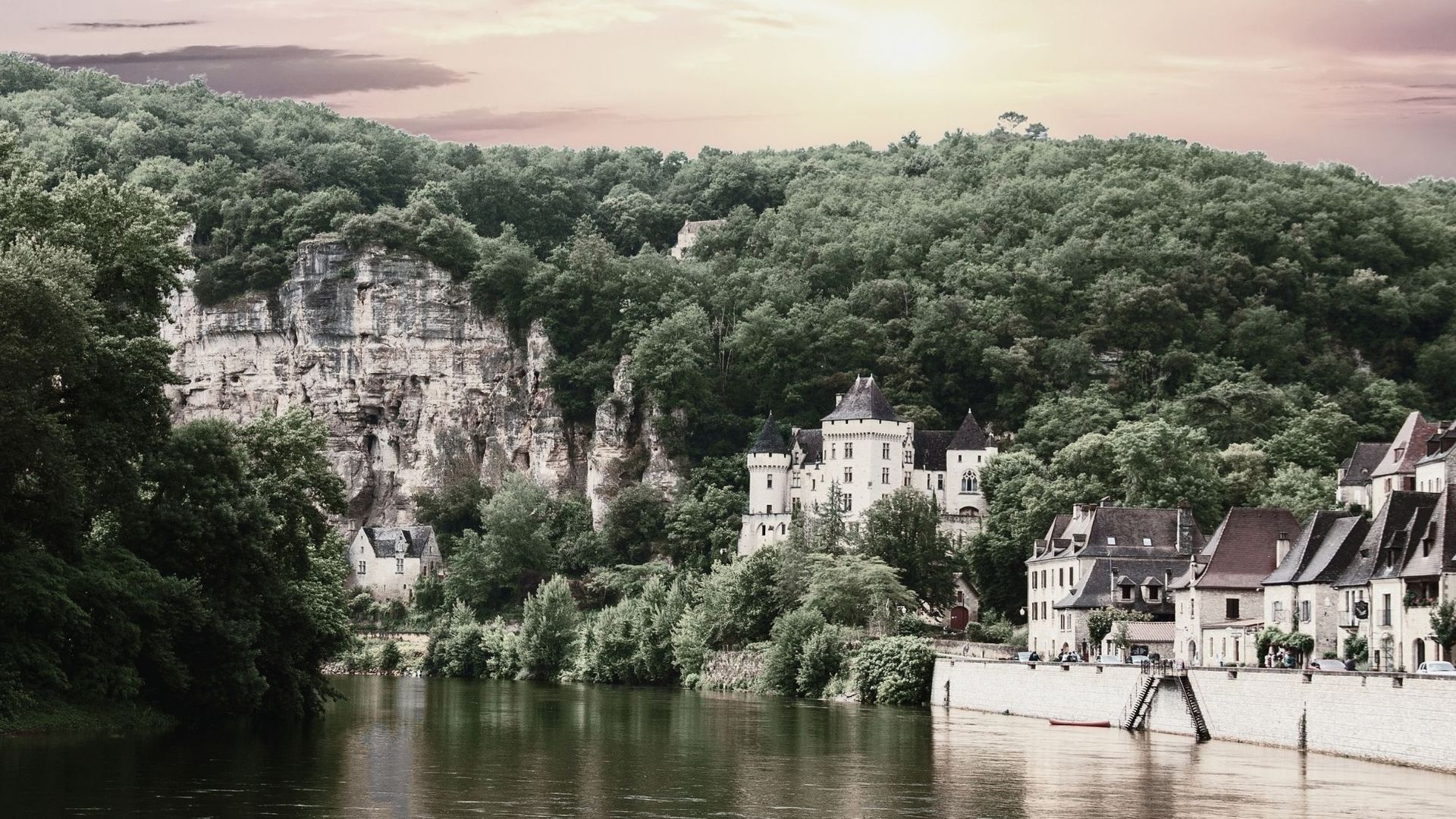
Buying Property in the Dordogne: Châteaux, Farmhouses and the Périgord Dream
28 April 2026 · Sarah & Sabine
The Dordogne consistently ranks among the most searched destinations for international property buyers in France, and the reasons are not difficult to understand. A landscape of golden limestone cliffs, medieval villages, prehistoric caves, and slow-moving rivers has attracted northern Europeans for decades. Yet the market is more nuanced than its reputation suggests, and buying well here requires the same rigorous analysis you would apply to any other asset class.
At Maison Arboris, we work exclusively on behalf of buyers. We have no properties to sell and no commissions to collect from vendors. What follows is an honest, data-informed guide to the Dordogne real estate market, written for international buyers who want clarity before commitment.
Table of Contents
- Why Buy Real Estate in the Dordogne?
- Understanding the Dordogne Property Market
- Types of Property for Sale in the Dordogne
- Top Locations to Buy Real Estate in the Dordogne
- The Most Beautiful Villages: A Separate Chapter
- The Dordogne Real Estate Buying Process
- Financing Your Dordogne Property Purchase
- Renting Out Your Dordogne Property
- Living in the Dordogne: Practical Considerations
- Start Your Dordogne Property Search
Why Buy Real Estate in the Dordogne?
The Dordogne’s Enduring Appeal for International Buyers
The Dordogne département, officially numbered 24 and situated in the heart of the Nouvelle-Aquitaine region, has been a destination of choice for British, Dutch, Belgian, American, and increasingly Gulf-based buyers for more than four decades. Its appeal is structural rather than cyclical. The combination of relative affordability compared to Provence or the Côte d’Azur, a well-established expat infrastructure, and genuine architectural heritage creates a market with stable, long-term demand.
British buyers remain the dominant foreign purchaser group, accounting for an estimated 25 to 30 percent of international transactions in certain communes. However, post-Brexit complexity has opened the market to more American and Northern European buyers who previously overlooked the region.
Quality of Life: Climate, Culture, and Cuisine
The Dordogne benefits from a semi-continental climate with warm, dry summers and mild winters, receiving approximately 2,000 hours of sunshine per year. This compares favourably to northern France and is sufficient to support outdoor living for the majority of the calendar year, without the heat extremes of the Mediterranean littoral in August.
Culturally, the département is extraordinary. It contains the highest concentration of prehistoric sites in Europe, including Lascaux IV, Rouffignac, and Font-de-Gaume. Its medieval architecture, from the fortified bastide towns built during the Hundred Years’ War to the Renaissance châteaux overlooking the Dordogne River, provides a built environment of exceptional quality. Périgord cuisine, built around duck confit, foie gras, truffles, and Monbazillac wine, is not a marketing construct. It is a deeply embedded culinary tradition that supports a network of markets, restaurants, and artisan producers.
Property Value Trends and Investment Potential in the Dordogne
The Dordogne market does not behave like a primary urban market. Price growth is moderate and steady rather than speculative. Over the decade from 2014 to 2024, average property values across the département increased by approximately 28 to 35 percent, with the strongest growth concentrated in the Périgord Noir zone around Sarlat. This is not a region for short-term capital gains speculation. It is, however, a region where well-selected properties hold value reliably, generate meaningful rental income during the tourist season, and provide a quality of life that buyers consistently report as exceeding expectations.
Comparing Dordogne Real Estate to Other French Regions
Compared to Provence or the Côte d’Azur, the Dordogne offers significantly lower entry prices for equivalent surface areas and architectural quality. A stone farmhouse with four bedrooms, a pool, and one hectare of land that costs €450,000 to €600,000 in the Dordogne would command €900,000 to €1.4 million in the Luberon. The trade-off is lower peak rental yields and less year-round sunshine. Compared to Brittany, the Dordogne offers warmer summers and stronger tourist rental demand. Compared to the Loire Valley, it offers more authentic rural character and lower prices.
Understanding the Dordogne Property Market
Current Market Overview and Price Trends
The Dordogne market in 2025 and early 2026 has stabilised after the post-pandemic surge of 2021 to 2023, during which demand from buyers relocating from urban centres drove prices up sharply in the most desirable communes. Transaction volumes have normalised, and motivated sellers, particularly those with properties requiring renovation, have become more negotiable. This represents a structurally favourable entry point for informed buyers.
Average Property Prices by Area and Type
Price variation across the four Périgord zones is significant. The Périgord Noir, centred on Sarlat and the Vézère and Dordogne valleys, commands the highest premiums. The Périgord Blanc around Périgueux is more accessible. The Périgord Vert in the north is the most affordable. The Périgord Pourpre, around Bergerac, sits at an intermediate price point reinforced by wine tourism.
Comparison Table: Property Prices Across Dordogne Zones
| Zone | Key Towns | Avg. Price per m² (House) | Character | Foreign Buyer Interest |
|---|---|---|---|---|
| Périgord Noir | Sarlat, Les Eyzies, Domme | €1,800 to €2,800 | Limestone cliffs, medieval villages, tourism peak | Very High |
| Périgord Blanc | Périgueux, Brantôme (south) | €1,100 to €1,700 | Administrative centre, less touristy | Moderate |
| Périgord Vert | Nontron, Jumilhac-le-Grand | €700 to €1,200 | Green hills, rivers, very rural | Low to Moderate |
| Périgord Pourpre | Bergerac, Issigeac, Eymet | €1,300 to €2,000 | Vineyards, bastide towns, British community | High |
Source: Notaires de France DVF data and Maison Arboris market analysis, 2025 to 2026.
Best Time to Buy Property in the Dordogne
The optimal acquisition window is typically October through March. During these months, tourist activity is minimal, vendors are more psychologically prepared to negotiate, and you can assess a property’s winterisation, insulation, and heating performance accurately. Buying during the summer, when the Dordogne is at its most attractive, is the most emotionally dangerous moment for a buyer. The risk of paying a premium based on an idealised impression is statistically higher.
How Brexit Has Affected British Buyers in the Dordogne
Brexit did not prohibit British citizens from buying property in France. It did, however, introduce complexity in three areas: residency rights, tax treaty application, and travel limitations under the 90-in-180-day Schengen rule. British buyers who wish to spend more than 90 days in France per 180-day period must now obtain a visa, typically a long-stay visa or a talent passport. Many British buyers in the Dordogne now structure their ownership to include formal residency applications, or they purchase through an SCI (Société Civile Immobilière, a French civil property company) for more flexible estate planning. We address the SCI option in the financing section below.
Types of Property for Sale in the Dordogne
Traditional Périgourdine Stone Houses
The iconic property type of the region. Built in warm golden limestone, often with lauze stone roofs or classic Roman tile, these houses range from modest two-bedroom maisons de village to expansive multi-wing residences. Structural solidity is generally excellent, but buyers should scrutinise roofing, damp penetration points, and the condition of original oak beams. A pre-purchase structural survey, while not legally mandatory in France, is strongly recommended and in our view non-negotiable.
Châteaux and Manoir Properties
The Dordogne contains an extraordinary density of smaller châteaux and manoirs, many of which are privately held and occasionally reach the market. Entry-level châteaux in need of renovation can be found from €600,000 to €1.2 million. Turnkey properties in this category typically start at €2 million and above. Buyers should be aware that classified historic monuments (Monuments Historiques) offer significant tax advantages, including deductibility of restoration costs against French taxable income, but also impose constraints on intervention and require approval from the Direction Régionale des Affaires Culturelles (DRAC).
Farmhouses and Rural Domaines
Properties with agricultural land, outbuildings, and multi-hectare plots represent some of the strongest value propositions in the market. A farmhouse with 5 to 10 hectares, several barns, and a pool can be acquired for €350,000 to €700,000 in the Périgord Vert or Blanc zones. These are complex acquisitions requiring careful agricultural land status verification, as SAFER (the French agricultural land authority) holds a right of pre-emption on many rural sales.
Village Houses and Town Apartments
For buyers seeking a lock-and-leave pied-à-terre with minimal maintenance, village houses in towns like Sarlat, Brantôme, or Bergerac offer a compelling alternative. Prices in Sarlat’s historic centre range from €200,000 to €500,000 for two to four bedrooms.
Renovation Projects and Barn Conversions
The Dordogne has a substantial stock of agricultural buildings that can be converted to residential use, subject to planning permission (permis de construire). These represent the highest risk and potentially the highest reward category. Budget accuracy is critical. French renovation costs in artisan-dependent rural areas frequently exceed initial estimates by 20 to 40 percent, and lead times for skilled local craftsmen are long.
Properties with Gîtes and Rental Income Potential
A gîte is a self-contained holiday rental unit. Many Dordogne properties include one or more gîtes generating income during the April to October tourist season. A well-managed two-bedroom gîte in the Périgord Noir can generate €15,000 to €25,000 per season in gross rental income.
Luxury Villas with Swimming Pools
The upper residential market in the Dordogne is anchored by contemporary or recently renovated luxury villas with infinity pools, panoramic views, and full staff capacity. These properties occupy a niche between the châteaux market and the premium residential sector, typically priced between €800,000 and €2.5 million.
Comparison Table: Property Types in the Dordogne
| Property Type | Entry Price | Key Considerations | Ideal Buyer Profile |
|---|---|---|---|
| Périgourdine Stone House | €180,000 to €600,000 | Verify roof and beam condition | Primary residence, holiday home |
| Château or Manoir | €600,000 to €5M+ | MH classification, DRAC compliance | Heritage enthusiast, hospitality project |
| Farmhouse with Land | €300,000 to €800,000 | SAFER pre-emption, agricultural status | Rural lifestyle, privacy seekers |
| Village House | €150,000 to €500,000 | Low maintenance, high rental demand | Pied-à-terre, lock-and-leave buyers |
| Renovation or Barn | €80,000 to €350,000 | High risk, requires detailed build budget | Experienced renovators, project buyers |
| Gîte Complex | €400,000 to €1.2M | Seasonal income, management complexity | Investor-lifestyle hybrid buyers |
| Luxury Villa with Pool | €800,000 to €2.5M | Market liquidity thinner at upper end | High-net-worth, primary or seasonal use |
Top Locations to Buy Real Estate in the Dordogne
Sarlat-la-Canéda and Périgord Noir
Sarlat is the undisputed epicentre of the Dordogne property market for international buyers. Its medieval centre, protected as a UNESCO heritage zone, is one of the best-preserved in France. Properties within 20 kilometres of Sarlat command the highest premiums in the département and sustain strong rental demand throughout the tourist season (June to September). The villages of Domme, La Roque-Gageac, and Beynac lie within this radius and are themselves among the most photographed rural landscapes in France.
Périgueux and Surroundings
Périgueux, the préfecture of the Dordogne, is a functioning city with hospital infrastructure, a TGV-connected train station, and a university. It attracts a different buyer profile: those seeking year-round habitability rather than seasonal tourism. Property prices are meaningfully lower than in the Périgord Noir, and the city’s Gallo-Roman heritage, centred on the extraordinary Saint-Front Cathedral, is chronically underestimated.
Bergerac and the Dordogne Valley
Bergerac has direct air connections to the United Kingdom via several low-cost carriers, making it the most accessible entry point in the département for British buyers. The surrounding wine country (AOC Bergerac, Pécharmant, Monbazillac) adds lifestyle appeal. The British expat community here is substantial, which facilitates integration but also creates micromarket dynamics where certain price brackets are influenced by pound-sterling purchasing power.
Les Eyzies and the Vézère Valley
Les Eyzies is the self-proclaimed “capital of prehistory” and sits at the junction of the Vézère and Beune valleys. The surrounding landscape is dramatic, with cliff-side troglodyte dwellings and Cro-Magnon sites. Properties here suit buyers who prioritise natural landscape over village animation. Prices are slightly lower than the Sarlat axis.
Monpazier and the Bastide Villages
Monpazier, built by Edward I of England in 1284, is considered the finest surviving medieval bastide town in France. The surrounding bastide territory, including Beaumont-du-Périgord, Villeréal, and Monflanquin (the last of which is technically in Lot-et-Garonne but architecturally identical), contains some of the most characterful village properties in the region at prices still below the Périgord Noir average.
Brantôme and Périgord Vert
Brantôme, built on an island in the River Dronne, is sometimes called “the Venice of Périgord.” The Périgord Vert is the green, verdant north of the département, characterised by rivers, forests, and dairy farming. It attracts buyers seeking absolute tranquillity and privacy. Entry-level properties here represent the most affordable point in the Dordogne market.
The Most Beautiful Villages: A Separate Chapter
The Dordogne holds a remarkable concentration of villages classified as “Plus Beaux Villages de France” (Most Beautiful Villages of France), an official French government designation awarded to fewer than 170 communes nationwide. The département’s seven classified villages are not simply picturesque. They are living communities with active property markets, and their classification has a direct and quantifiable effect on local values.
The classified villages are:
- Beynac-et-Cazenac: A fortified village dominated by a 13th-century castle perched above the Dordogne River. One of the most vertically dramatic settings in France.
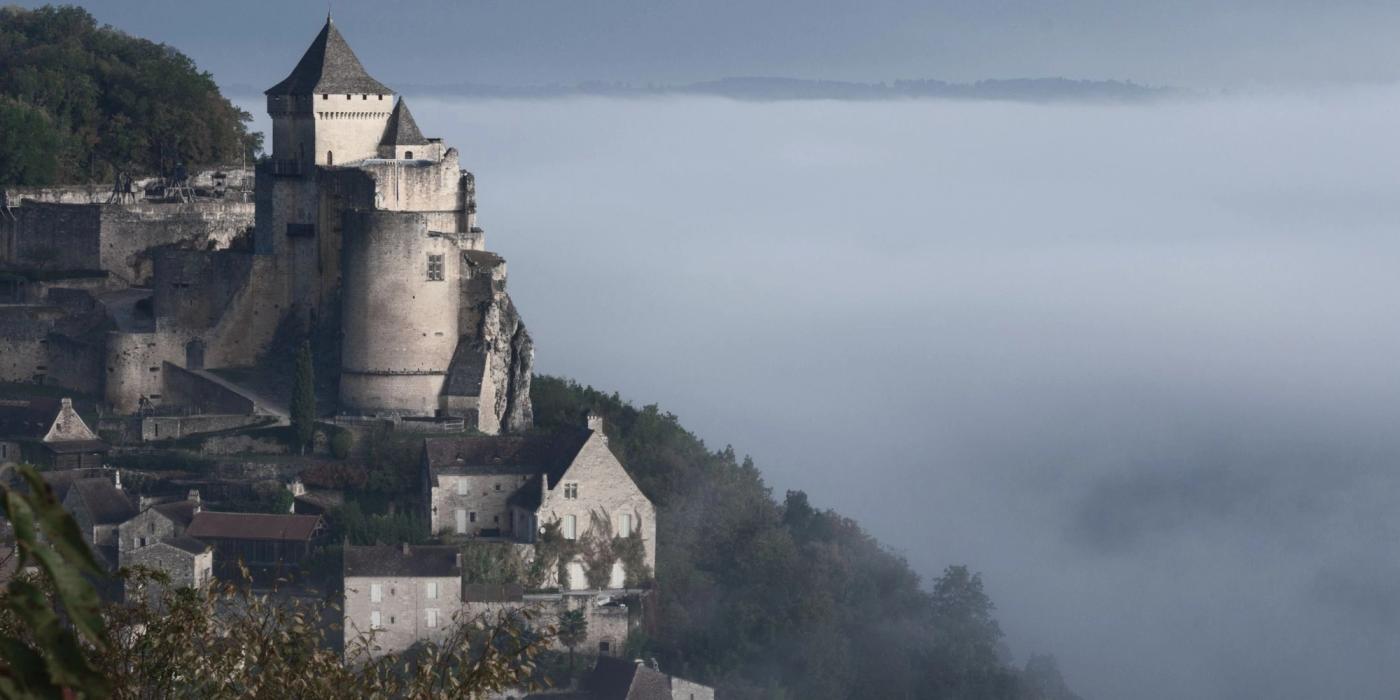
- Castelnaud-la-Chapelle: Facing Beynac from the opposite bank, Castelnaud is anchored by its medieval war museum château.
- Domme: A bastide village on a promontory with panoramic views over the Dordogne valley. The only classified bastide in the département.
- La Roque-Gageac: Built directly into the base of a golden cliff above the river, this is possibly the most photographed village in the Dordogne.
- Limeuil: At the confluence of the Dordogne and Vézère rivers, Limeuil is calmer and less commercially developed than its neighbours, making it a genuinely interesting acquisition target.
- Monpazier: As discussed above, the finest bastide town in France, with a geometric market square unchanged since the 13th century.
- Saint-Léon-sur-Vézère: A small Romanesque church village on the Vézère, less touristic and offering genuine authenticity.
From a property advisory perspective, the “Plus Beaux Villages” classification functions as a floor on values. Properties within or immediately adjacent to these villages rarely depreciate in absolute terms, because structural demand from national and international buyers remains consistent. However, buyers should note that renovation constraints are stricter in these areas. The Architectes des Bâtiments de France (ABF) has oversight over modifications to buildings within their perimeters, and approval processes can be lengthy. We recommend engaging a local architect familiar with ABF procedures before committing to any renovation project in these villages.
The Dordogne Real Estate Buying Process
Step-by-Step Guide to Purchasing Property in France
The French property acquisition process is sequential and legally structured. For international buyers unfamiliar with it, the formality can be reassuring, but the details matter. Our detailed breakdown is available in our guide to buying in France, but the core stages are as follows:
- Property identification and initial due diligence: Market research, physical visits, and technical pre-assessment.
- Offer and negotiation: An informal written offer followed by negotiation on price and conditions.
- Compromis de Vente: A preliminary sales agreement, legally binding for the vendor immediately but giving the buyer a 10-day cooling-off period during which they may withdraw without penalty.
- Conditions suspensives: Clauses that protect the buyer, including financing approval, absence of pre-emption by SAFER or the commune, and satisfactory survey results.
- Acte de Vente: The final notarised deed of sale, signed before a Notaire (a state-appointed legal officer), at which point ownership transfers and funds are released.
The Role of the Notaire in French Property Transactions
The Notaire is not the buyer’s solicitor. They are an officer of the French state whose primary role is to ensure the transaction is legally valid and that taxes are correctly collected. Buyers may appoint their own Notaire in addition to the vendor’s Notaire, at no extra cost (the fees are shared), and this is strongly advisable for complex transactions.
Understanding the Compromis de Vente and Acte de Vente
The Compromis de Vente is signed typically two to four weeks after an offer is accepted. It commits both parties to the transaction subject to stated conditions. The buyer’s deposit, typically 10 percent of the purchase price, is held in the Notaire’s escrow account. The Acte de Vente follows two to three months later, once all conditions are satisfied and financing is confirmed.
Key Legal Checks and Due Diligence for Buyers
The legal due diligence conducted at the Compromis stage includes:
- Verification of title and absence of encumbrances or mortgages
- Confirmation of planning status (CU, Certificat d’Urbanisme)
- Review of any easements (servitudes) over the property
- Checking for pending urban planning changes
- SAFER pre-emption clearance for rural properties
- Review of co-ownership regulations (règlement de copropriété) for apartments
Mandatory Property Surveys and Diagnostics in France
French law requires a vendor to provide a Dossier de Diagnostic Technique (DDT) comprising several mandatory reports. These include:
- DPE (Diagnostic de Performance Energétique): The energy efficiency rating, now critical for investment viability given France’s climate law, which progressively restricts the rental of low-rated properties. Our detailed analysis is in our guide to the DPE rating.
- Amiante (asbestos) survey: Mandatory for buildings constructed before 1997.
- Plomb (lead paint) survey: Required for pre-1949 buildings.
- Termites: Required in designated risk zones, which include parts of the Dordogne.
- Assainissement: Certification of the septic system, critical for rural properties. Many Dordogne properties use a fosse septique (septic tank) rather than mains drainage, and non-conforming systems must be brought up to standard within one year of sale.
Taxes, Notaire Fees, and Additional Purchase Costs
Total acquisition costs on a standard resale property in France run to approximately 7 to 8 percent of the purchase price. On new-build or VEFA properties, this drops to approximately 2 to 3 percent. The main components are:
- Droits de mutation (transfer taxes): Approximately 5.8 percent for resale properties
- Notaire’s professional fee: Regulated and degressive, ranging from approximately 0.8 to 4 percent depending on price
- Land registry and administrative fees: Approximately 0.1 percent
There are no agent fees payable directly by the buyer in most French transactions; the commission is typically included in the listed price and paid by the vendor.
Financing Your Dordogne Property Purchase
Getting a French Mortgage as a Foreign Buyer
French banks will lend to non-residents purchasing in France, but the criteria are stricter than for French residents. Lenders typically require a deposit of 20 to 30 percent of the purchase price, documented proof of income over two to three years, and debt-to-income ratios below 33 percent. British, American, and Gulf buyers will each face slightly different documentation requirements depending on how their income is structured.
For buyers structured through holding companies or trusts, we recommend working with a French mortgage broker (courtier) who specialises in non-resident financing, as standard bank branches frequently lack the expertise to process these applications efficiently.
Currency Exchange Considerations for Non-Euro Buyers
For British, American, or Gulf-based buyers, currency conversion risk is a material financial consideration. The difference between a favourable and unfavourable exchange rate can represent tens of thousands of euros on a transaction above €500,000. We recommend working with a specialist FX provider rather than a retail bank for large transfers, and structuring a forward contract if there is a meaningful gap between offer acceptance and completion.
Using Equity or Cash Purchases
Approximately 35 to 40 percent of international property purchases in the Dordogne are completed without a mortgage. Cash buyers have a significant negotiating advantage, particularly with motivated vendors or in estate sales. The speed and certainty of a cash transaction is a genuine differentiator in a market where financing delays are a known risk.
Tax Implications for Non-Resident Property Owners in France
Non-residents owning French property are subject to French taxation on income derived from that property (rental income) and on capital gains upon sale. The applicable rates and treaty provisions depend on the buyer’s country of tax residence. American buyers face an additional layer of complexity due to FBAR and FATCA reporting obligations on foreign assets. For buyers considering holding a Dordogne property through a corporate structure, the SCI (Société Civile Immobilière) merits careful analysis, as it offers estate planning flexibility but has specific tax implications depending on whether it is subject to income tax (IR) or corporation tax (IS).
Renting Out Your Dordogne Property
The Gîte Market: Generating Rental Income in the Dordogne
The Dordogne is one of the highest-demand domestic and international holiday rental markets in France. The summer season (late June to early September) drives the bulk of annual rental income, with a secondary shoulder season in May, June, and the school holiday periods of April and October.
A well-positioned, well-presented property with a private pool in the Périgord Noir can achieve 12 to 16 weeks of bookings per year at peak rates of €2,000 to €5,000 per week for larger properties. More modest units generate more modest returns, but the fundamental demand is structural and robust.
Short-Term vs Long-Term Rental Strategies
Most buyers in the Dordogne pursue a hybrid model: short-term holiday rentals during the tourist season and either personal use or longer winter tenancies for the remainder of the year. A strict long-term rental strategy is less common and generates lower yields, but provides income stability and lower management intensity.
Legal Requirements for Renting Property in France
Short-term rentals in France require registration with the local mairie (commune hall) and, in some communes, authorisation as a meublé de tourisme. Rental income is subject to French income tax for non-residents at a minimum rate of 20 percent, though the régime micro-BIC allows a 50 percent abatement on gross receipts for qualifying furnished rentals before tax is applied.
Expected Rental Yields in the Dordogne
Gross rental yields in the Dordogne typically range from 4 to 6 percent for well-managed seasonal properties in prime zones. Net yields, after management fees (typically 15 to 25 percent of gross revenue for a local management company), maintenance, local taxes, and periods of vacancy, settle in the 2.5 to 4 percent range. This is not a high-yield investment market. It is a lifestyle asset with a meaningful yield component rather than a pure income vehicle.
Living in the Dordogne: Practical Considerations
Residency and Visa Requirements for Non-EU Buyers
EU and EEA citizens retain the right to reside in France without restriction. British citizens post-Brexit require a long-stay visa (visa de long séjour, VLS-TS) to reside in France for periods exceeding 90 days in any 180-day period. This must be obtained from the French consulate in the UK before arrival. American citizens are in a similar position and must obtain a visa for stays beyond 90 days. The application process typically takes two to three months, and financial solvency requirements must be demonstrated.
Healthcare, Schools, and Essential Services
The Dordogne has a functioning public healthcare system anchored by the hospital centres of Périgueux, Bergerac, and Sarlat. However, it faces the same rural medical desertification challenges as many French rural areas, with GP availability in remote communes increasingly limited. Private health insurance is strongly recommended for non-residents and required as part of long-stay visa applications.
International schools are not present within the département itself. Families with school-age children will typically use the French public school system, which functions adequately at primary level, or make arrangements with private institutions in Bordeaux (approximately 90 minutes from Périgueux by road).
Getting Around: Transport Links and Nearest Airports
The Dordogne is not well-served by rail for international access. The practical entry points are:
- Bergerac Airport (EGC): Seasonal connections to the UK (Ryanair, Flybe) and occasional other European routes. Capacity is limited.
- Bordeaux Airport (BOD): Full international hub, approximately 90 to 120 minutes from most Dordogne addresses. The strongest option for transatlantic or Middle Eastern connections.
- Périgueux Airport: Very limited commercial service, primarily business aviation.
A car is not optional in the Dordogne. It is a structural necessity for daily life in any location outside Périgueux or Bergerac.
Renovating a Property in the Dordogne: Rules and Local Craftsmen
Renovation in the Dordogne operates within a regulatory framework that protects the architectural character of the region. In classified villages and ZPPAUP zones (Zones de Protection du Patrimoine Architectural, Urbain et Paysager), all exterior modifications require ABF approval. Even outside these zones, planning rules restrict material choices, roof types, and façade treatments in many communes.
Local craftsmen (artisans) specialising in traditional stone construction, lauze roofing, and timber framing are exceptional in quality but often have order books extending 12 to 18 months ahead. Budget planning must account for these delays.
The Expat Community and Integration into Local Life
The Dordogne has one of the largest and most established British expat communities in continental Europe, concentrated particularly around the Bergerac and Eymet areas and throughout the Périgord Noir. This community provides genuine practical support (medical referrals, tradespeople, administrative help) but can also create anglophone bubbles that limit true integration into French life. Buyers who engage with French language learning and participate in local markets, associations, and commune life consistently report higher satisfaction over time.
Start Your Dordogne Property Search
Approaching the Dordogne market effectively requires understanding which zone matches your actual objectives, not simply which area photographs most beautifully.
Browse Properties for Sale in Périgord Noir
The Périgord Noir is the right zone for buyers prioritising rental income, access to cultural landmarks, and the highest architectural density. It is the most competitive and most expensive zone, but it also has the deepest buyer liquidity if you ever need to resell.
Browse Properties for Sale in Périgord Blanc
Périgord Blanc suits buyers who want year-round habitability, proximity to services, and lower entry costs. Périgueux itself is an undervalued city by any objective measure, and the rural communes around it offer genuine value.
Browse Properties for Sale in Périgord Vert
The Périgord Vert is for buyers who place absolute privacy and natural landscape above all other criteria. It is not a rental income market. It is a personal retreat market. Entry prices here represent the most accessible point in the département.
Browse Properties for Sale in Périgord Pourpre
The Périgord Pourpre around Bergerac is the zone for buyers who need practical air access, enjoy wine country living, and want to participate in a well-established anglophone community without being isolated from French life.
Work with a Dordogne Property Specialist
The Dordogne market, like all French regional property markets, rewards preparation and independent advice. Many of the best properties in this region never appear on public portals. They are traded through notarial networks, local agents, and word-of-mouth channels. Understanding off-market access in France is, in our view, one of the most significant competitive advantages available to a prepared buyer.
At Maison Arboris, we work exclusively for buyers across all four Périgord zones. We carry out independent technical assessments, verify price coherence against DVF (Demandes de Valeurs Foncières, the French government’s public transaction database), negotiate on your behalf, and coordinate the legal and financial process from initial briefing to notarised signature. Our fee is paid entirely by the buyer, not the vendor, which eliminates any conflict of interest in our recommendations.
The Dordogne is a region of exceptional depth. Approached with rigour and the right support, it is one of the most rewarding property markets in France for the international buyer who takes the time to understand it properly.
Frequently asked questions
01What are average property prices in the Dordogne in 2026?
What are average property prices in the Dordogne in 2026?
Prices vary significantly by zone. Périgord Noir averages €1,800 to €2,800 per m², Périgord Pourpre €1,300 to €2,000, Périgord Blanc €1,100 to €1,700, and Périgord Vert €700 to €1,200. Entry-level stone houses start around €180,000, while luxury villas reach €2.5 million or more.
02Can British citizens still buy property in the Dordogne after Brexit?
Can British citizens still buy property in the Dordogne after Brexit?
Yes. Brexit did not prevent British citizens from purchasing French property. However, stays exceeding 90 days within any 180-day period now require a long-stay visa obtained before arrival. Many British buyers also use an SCI structure for estate planning flexibility and to manage residency-related complications more effectively.
03What rental income can I expect from a Dordogne holiday property?
What rental income can I expect from a Dordogne holiday property?
A well-located property with a pool in Périgord Noir can achieve 12 to 16 booking weeks annually. Gross yields typically reach 4 to 6 percent, while net yields after management fees, maintenance, and taxes settle between 2.5 and 4 percent. Larger properties can command €2,000 to €5,000 per week during peak summer season.
04What are the total buying costs when purchasing property in France?
What are the total buying costs when purchasing property in France?
On a standard resale property, total acquisition costs run approximately 7 to 8 percent of the purchase price. This covers transfer taxes of roughly 5.8 percent, regulated notaire fees, and land registry charges. New-build purchases attract lower costs of around 2 to 3 percent. No additional agent fees are payable directly by the buyer.
05When is the best time to buy property in the Dordogne?
When is the best time to buy property in the Dordogne?
October through March is the optimal buying window. Vendors are more negotiable, tourist-season emotional bias is absent, and you can properly assess insulation, heating, and winterisation. Summer purchases carry a statistically higher risk of overpaying, as properties appear at their most attractive and buyers are more susceptible to impulse-driven decisions.