Brittany Real Estate: Buying a Coastal Property in France's Most Authentic Region
27 April 2026 · Sarah & Sabine
Brittany occupies a singular position in the French property market. It is not the flashiest region, not the warmest, and certainly not the most glamorous in the conventional sense. Yet year after year, it attracts a consistent flow of international buyers, from British families seeking a liveable second home to American retirees drawn by its Celtic heritage, from Gulf investors looking for stable asset value to Parisians escaping the capital’s density. The question is not whether Brittany deserves your attention. The question is whether you understand it well enough to buy there wisely.
This guide is built for buyers who want clarity, not enthusiasm. We will walk you through every stage of the process, from understanding the market by department to navigating the notaire system, from assessing renovation costs to structuring your ownership correctly. We will also highlight some of Brittany’s most extraordinary villages, because the right location is not just a matter of price per square metre. It is a matter of understanding what you are actually buying into.
Table of Contents
- Why Buy a House in Brittany?
- Understanding the Brittany Property Market
- Brittany’s Four Departments: Where Should You Buy?
- The Most Beautiful Villages in Brittany: A Strategic Focus
- Types of Property Available in Brittany
- The Step-by-Step Process of Buying a House in Brittany
- Costs and Taxes When Buying Property in Brittany
- Financing Your Brittany Property Purchase
- Legal and Regulatory Considerations
- Renovation and Restoration in Brittany
- Living in Brittany After You Buy
- Renting Out Your Brittany Property
- Popular Towns and Areas for Buying in Brittany
Why Buy a House in Brittany?
The Lifestyle Appeal: Coast, Culture, and Countryside
Brittany is one of the few French regions where you can genuinely have three distinct environments within a one-hour drive: an Atlantic coastline with dramatic cliff formations, a bocage countryside threaded with rivers and forests, and historic towns built from granite with a cultural identity unlike anywhere else in France. The Breton identity, rooted in Celtic heritage, is not a tourist performance. It is a living culture expressed through language, music, festivals, and architecture, and for many buyers, that depth of character is precisely what makes the region compelling.
The quality of life metrics are consistently strong. Brittany ranks highly in French national studies for perceived well-being, access to nature, and social cohesion. Crime rates are among the lowest in metropolitan France. Food culture is exceptional, from the seafood markets of Concarneau to the cideries of Fouesnant, and the local economy is diversified enough to support a full-time population, not just seasonal tourism.
Climate and Quality of Life
Brittany’s climate is oceanic, which means mild winters, cool summers, and rainfall distributed across the year rather than concentrated in a single season. Average summer temperatures sit between 18°C and 22°C, which is cooler than Provence or the Côte d’Azur but also more consistent and less extreme. The region receives approximately 800 to 1,200mm of rainfall annually depending on the location, with the north coast generally drier than Finistère in the far west.
For buyers coming from northern Europe or North America, this climate is familiar and manageable. For those seeking guaranteed sunshine, it requires honest adjustment of expectations.
Brittany vs. Other French Regions: A Comparative View
| Criterion | Brittany | Normandy | Dordogne |
|---|---|---|---|
| Avg. price per m² (house) | €1,800–€2,600 | €1,600–€2,400 | €1,400–€2,200 |
| Climate | Oceanic, mild | Oceanic, greyer | Continental, warmer |
| Coastline access | Extensive (2,800 km) | Moderate | None |
| TGV access | Yes (Rennes, 1h25 from Paris) | Limited | Limited |
| Expat community | Large (UK, US, NL) | Large (UK) | Very large (UK) |
| Rental yield potential | Moderate to high | Moderate | Moderate |
| Cultural distinctiveness | Very high (Celtic) | Moderate | Moderate |
The data confirms what experienced buyers already sense: Brittany offers a stronger lifestyle proposition than Normandy and better infrastructure than the Dordogne, at a price point that remains competitive relative to the amenities on offer.
Understanding the Brittany Property Market
Current House Prices in Brittany
As of 2024, the Brittany property market reflects a national trend of moderate price correction following the sharp rises of 2020 to 2022. Average house prices across the region sit between €1,800 and €2,600 per square metre, with significant variation between coastal, urban, and rural settings.
Key reference points:
- A village stone house (longère) in rural Côtes-d’Armor: €120,000 to €250,000
- A renovated coastal property in Morbihan with sea views: €350,000 to €700,000
- An apartment in Rennes city centre: €3,000 to €4,500 per m²
- A granite manor house with outbuildings: €300,000 to €1,200,000
Price Trends and Market Timing
The 2023 to 2024 correction was driven primarily by rising mortgage rates across the eurozone, which suppressed buyer activity and gave purchasers more negotiating leverage than at any point since 2018. This is a structurally interesting moment to enter the market, particularly for cash buyers or those using equity release from existing assets, because vendor motivation has increased while the supply of quality properties has not diminished.
Sabine’s market read: “The Brittany market does not behave like Paris or the Riviera. It does not crash and it does not spike. It moves slowly and its resilience is rooted in genuine demand from both domestic and international buyers. What we saw in 2023 was a volume correction, not a value collapse.”
Brittany’s Four Departments: Where Should You Buy?
This is one of the most consequential decisions in any Brittany purchase. The four departments are not interchangeable, and the differences in price, atmosphere, infrastructure, and property type are significant.
| Department | Avg. House Price (€/m²) | Property Character | Coast Access | TGV/Airport | Best For |
|---|---|---|---|---|---|
| Finistère (29) | €1,600–€2,200 | Stone longères, farms | Extensive | Brest airport | Rural buyers, renovation projects |
| Côtes-d'Armor (22) | €1,500–€2,000 | Villages, manors | North coast | Rennes TGV nearby | Value seekers, lifestyle buyers |
| Morbihan (56) | €2,000–€3,200 | Coastal villas, islands | Gulf + Atlantic | Lorient airport | Premium coastal buyers |
| Ille-et-Vilaine (35) | €2,000–€3,800 | Urban flats, periurban houses | North coast (limited) | Rennes TGV direct | Commuters, urban buyers |
Buying Property in Finistère
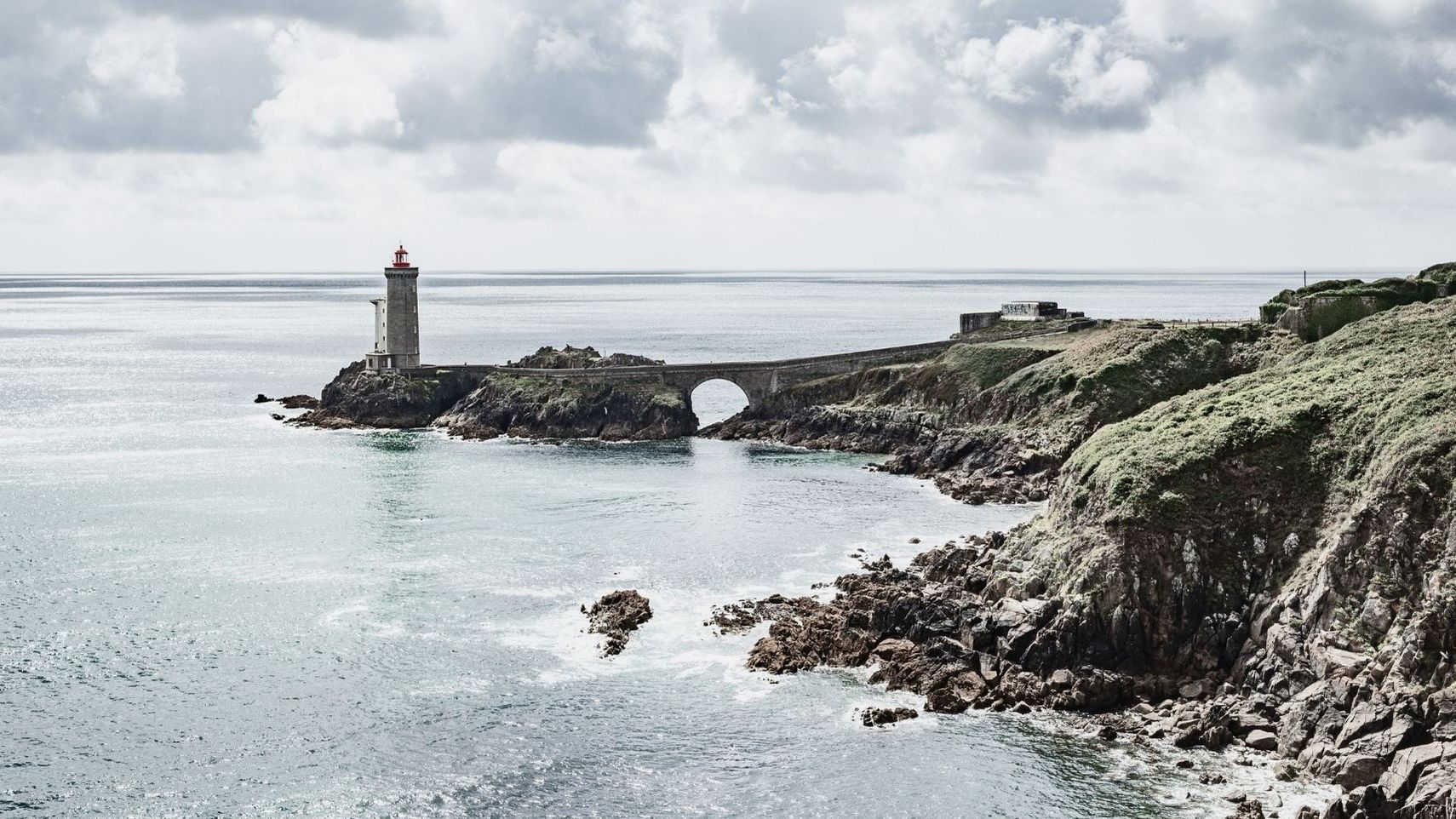
Finistère is the westernmost point of continental France, and it has a reputation that is both its greatest asset and its most significant challenge. The landscapes are extraordinary: the Crozon Peninsula, the Presqu’île de Crozon, the Monts d’Arrée, and the rugged coastline around Pointe du Raz are among the most visually dramatic in all of France. Property prices remain among the most accessible in Brittany, making it attractive for renovation buyers and those seeking substantial land.
The challenge is infrastructure. Brest has an airport with connections to Paris and several European cities, but the TGV does not reach as far as Finistère, and rural internet connectivity, while improving, is not yet uniform.
Buying Property in Côtes-d’Armor
Côtes-d’Armor offers perhaps the best value-for-lifestyle ratio in Brittany. The Pink Granite Coast (Côte de Granit Rose) in the north is one of the most photographed coastlines in Europe, and the inland areas around Dinan and Lamballe offer medieval architecture at prices that would be unthinkable in equivalent English market towns.
This is the department where €200,000 can still buy a structurally sound stone house with a garden, which makes it a consistent entry point for first-time French property buyers.
Buying Property in Morbihan
Morbihan is Brittany’s premium coastal market. The Gulf of Morbihan, with its near-Mediterranean microclimate and island-studded waters, commands prices that are measurably higher than the rest of the region. Vannes, the departmental capital, consistently appears in lists of France’s most desirable cities to live in, and its property market reflects that status.
For buyers seeking a coastal property with strong rental potential and long-term capital appreciation, Morbihan is the most defensible investment in Brittany. It is also the most expensive entry point.
Buying Property in Ille-et-Vilaine
Ille-et-Vilaine is anchored by Rennes, Brittany’s regional capital and one of France’s most dynamic mid-size cities. With a major university, a thriving technology sector, and a direct TGV link to Paris in 1 hour 25 minutes, Rennes functions as a different market from the rest of Brittany. Property in the city centre is priced accordingly, but the periurban communes within 30 kilometres offer good value for buyers who need urban proximity without urban density.
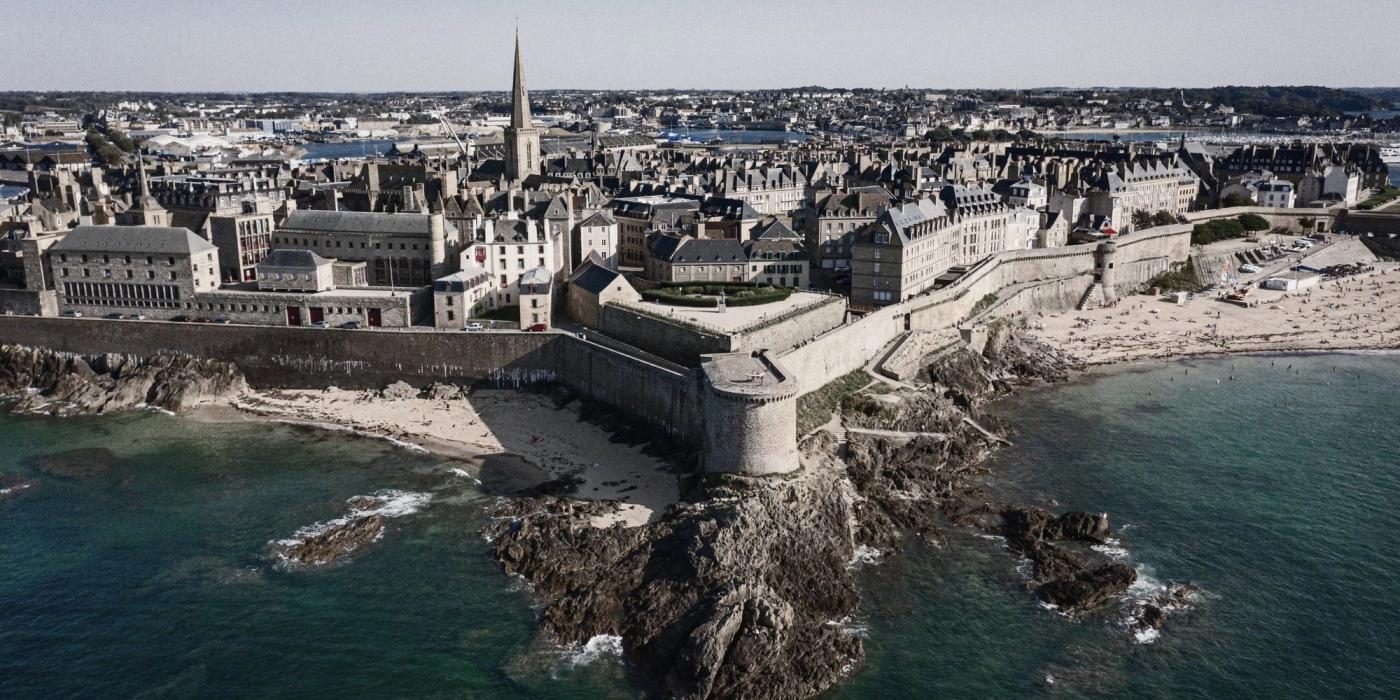
Saint-Malo, the historic walled port city on the north coast, belongs to Ille-et-Vilaine and represents its own micro-market, driven heavily by tourism and second-home demand from Parisians.
The Most Beautiful Villages in Brittany: A Strategic Focus
This section deserves particular attention because in Brittany, as in few other French regions, the village you choose defines not just your lifestyle but your resale profile and rental potential. Several of Brittany’s villages are officially classified under the national label Les Plus Beaux Villages de France, and others, while not formally listed, carry an equivalent gravitational pull for buyers.
Rochefort-en-Terre (Morbihan)
Frequently ranked among the most beautiful villages in France, Rochefort-en-Terre is built from dark schist and granite on a rocky promontory above the Arz valley. Its medieval streets, flower-filled windowsills, and carefully preserved architectural coherence have made it a consistent draw for buyers seeking a village property with cultural cachet. Property prices here carry a clear premium over surrounding rural Morbihan, reflecting both the village’s reputation and the restrictions that come with buying in a classified heritage zone. Renovation work requires prior approval, and the aesthetic standards enforced by local planning authorities are rigorous.
Locronan (Finistère)
Locronan is exceptional. Built almost entirely from granite in the 15th and 17th centuries around a central square that has barely changed in three hundred years, it is routinely used as a film set, which tells you something about the integrity of its visual character. It appeared as a fictional Breton town in Roman Polanski’s Tess and has featured in numerous French productions.
Buying property in or immediately adjacent to Locronan means entering one of Finistère’s most protected built environments. The upside is heritage preservation and consistent tourist interest. The strategic consideration is that renovation latitude is limited, and properties rarely come to market. When they do, they command prices well above the Finistère average.
Pont-Croix (Finistère)
Less internationally known than Locronan but equally deserving of attention, Pont-Croix sits on the Goyen river estuary near the Cap Sizun. Its steep cobbled streets, medieval church, and well-preserved merchant houses create an atmosphere of unusual architectural density for a small Breton town. Property here is more accessible in price than Locronan, and the proximity to the Pointe du Raz and the southern Finistère coastline adds practical lifestyle value.
Moncontour (Côtes-d’Armor)
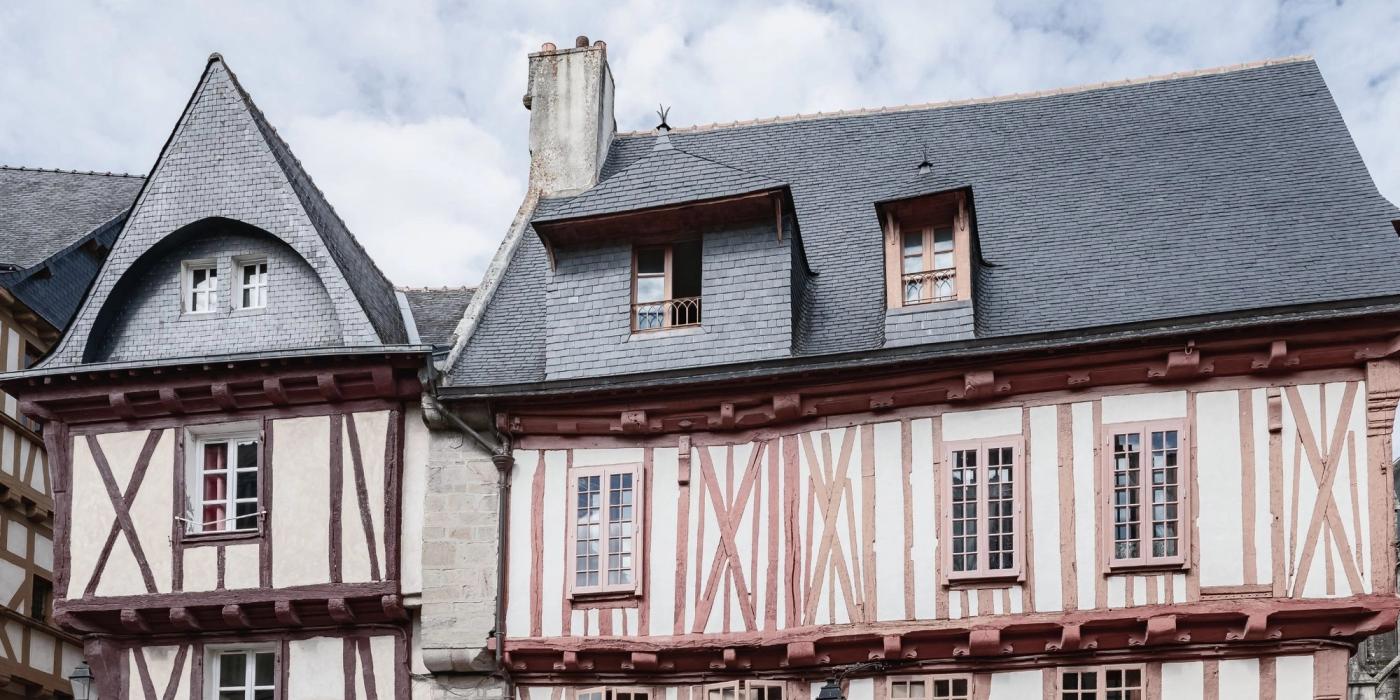
Moncontour is a small fortified town perched on a rocky spur in central Côtes-d’Armor. Its ramparts, medieval gate towers, and half-timbered houses give it a character that many buyers find more authentic than the more visited coastal towns. It is officially listed among Les Plus Beaux Villages de France and offers property prices that reflect its relative anonymity among international buyers. For buyers willing to look beyond the coast, this is a genuinely undervalued location.
La Roche-Bernard (Morbihan)
Sitting on the Vilaine river near the southern coast of Morbihan, La Roche-Bernard combines the character of a medieval river port with practical access to the coast. The village’s historic upper town, its marina, and its strong local gastronomic scene make it a lifestyle purchase as much as a real estate one. It connects efficiently to the Gulf of Morbihan area and to the Loire-Atlantique border, giving it an unusually broad catchment of amenities for such a small settlement.
Dinan (Côtes-d’Armor): The Urban Village Reference
Dinan is technically a town rather than a village, but its scale, its medieval completeness, and its sense of self-contained identity earn it a place in any discussion of Brittany’s most compelling built environments. Its port district on the Rance river, its 2.5 kilometres of intact medieval walls, and its concentration of half-timbered buildings constitute one of the best-preserved medieval urban landscapes in northern France. Property in the old town is sought after, relatively rare, and carries a justifiable premium.
The strategic note here: Dinan is within viable commuting distance of both Rennes and Saint-Malo, which gives it a dual market of lifestyle buyers and working residents that provides greater price resilience than purely tourism-dependent villages.
Types of Property Available in Brittany
Brittany’s property stock is distinctive and, to buyers unfamiliar with the region, occasionally surprising in its variety.
- Traditional stone longères: Single-storey or low-profile farmhouses built from local granite or schist, often with extensive outbuildings. These are the most common rural property type and the most frequently sold as renovation projects.
- Granite manor houses (manoirs): A tier above the longère, typically with formal gardens, multiple outbuildings, and architectural detailing that reflects the prosperity of Brittany’s medieval merchant and noble classes.
- Coastal villas: Concentrated in Morbihan and along the Pink Granite Coast, ranging from late 19th-century villas balnéaires to contemporary architect-designed homes.
- Gîte complexes: Multiple independent units on a single property, capable of generating rental income while the owner occupies a central house. These are popular with buyers seeking a property that partially finances itself.
- Apartments in Rennes and Brest: Functioning urban markets with investment-grade stock, particularly around the university districts.
- New-build and contemporary homes: Available primarily in periurban zones around Rennes, Vannes, and Lorient. Energy efficiency ratings are a practical consideration when comparing new-build to older stock.
The Step-by-Step Process of Buying a House in Brittany
The French purchasing process is sequential, legally structured, and less negotiable in its procedural steps than the equivalent in the UK or USA. Understanding each stage removes a significant source of anxiety for first-time buyers in France.
For a detailed step-by-step walkthrough applicable across all French regions, our guide on buying from abroad covers the full procedural framework.
Step 1: Budget and finance. Before viewing any property, establish your maximum budget inclusive of all acquisition costs, which typically add 7% to 10% on top of the purchase price for older properties.
Step 2: Location and property type. Define your criteria by department, proximity to coast or transport links, and property character. Do not conflate these decisions: location and property type are separate filters.
Step 3: Working with a French estate agent (agence immobilière). French estate agents represent the vendor by default. Their fees, typically 3% to 8% of the purchase price, are usually included in the advertised price (marked as honoraires inclus or HAI). A buyer’s agent, by contrast, works exclusively in your interest.
Step 4: Making an offer (offre d’achat). A written offer at a stated price. If accepted by the vendor, it creates a preliminary moral commitment, though the binding stage comes next.
Step 5: Signing the compromis de vente. This preliminary contract is the most significant document in the process. It commits both parties to the transaction at the agreed price and conditions. Conditions precedent (conditions suspensives), most commonly mortgage approval and clean survey results, are inserted here.
Step 6: The 10-day cooling-off period. Buyers have 10 calendar days after signing the compromis to withdraw without penalty. Vendors do not have this right.
Step 7: The notaire and conveyancing. The notaire is a state-appointed legal officer who manages the conveyancing process. Both buyer and vendor can instruct their own notaire at no additional cost to either party, as the fee is fixed by law and shared between them.
Step 8: Signing the acte de vente. The final deed of sale, signed before the notaire, at which point funds transfer and ownership passes.
Step 9: Registration and key handover. The notaire registers the transaction with the land registry (fichier immobilier). You receive the keys at the moment of signing.
Costs and Taxes When Buying Property in Brittany
Sarah’s analysis: “The single most consistent mistake we see international buyers make is under-budgeting acquisition costs. The property price is not the total cost. It is the starting point.”
Notaire fees and registration taxes on older properties (built more than 5 years ago) run at approximately 7% to 8% of the purchase price. This comprises registration taxes (droits de mutation), the notaire’s professional fee (regulated and scaled), and administrative disbursements.
For new-build properties, the rate drops to approximately 2% to 3%, but VAT at 20% is built into the price itself.
Estate agent fees: Where the agent’s commission is not included in the advertised price (marked hors honoraires or HH), the buyer pays the agency fee directly. This is less common but occurs, particularly with smaller independent agencies.
Ongoing annual taxes:
- Taxe foncière: The property ownership tax, paid by the owner regardless of whether the property is occupied. Rates vary significantly by commune. A rural house in Côtes-d’Armor might attract €600 to €1,500 per year, while an apartment in Rennes might reach €1,200 to €2,500.
- Taxe d’habitation: Effectively abolished for primary residences, but still applicable to second homes at rates set by each commune.
Costs first-time buyers frequently underestimate:
- Mandatory diagnostic reports (DDT), covering asbestos, lead, electricity, termites, energy performance, and flood risk. These are provided by the vendor but should be independently reviewed.
- Translation and bilingual legal costs if you require documents in English.
- Currency exchange losses on international transfers. A 1% to 2% rate differential on a €300,000 purchase represents €3,000 to €6,000 of real cost.
- Renovation and remediation budgets, which in Brittany’s older granite stock can be substantial, particularly around roof insulation, damp proofing, and heating system upgrades.
For a complete analysis of acquisition costs across France, see our dedicated guide on property costs.
Financing Your Brittany Property Purchase
French Mortgages for Foreign Buyers
French banks do lend to non-residents, but the criteria are more conservative than many buyers anticipate. Key parameters:
- Maximum debt-to-income ratio: 33% to 35% of gross monthly income across all existing debt.
- Loan-to-value: typically 70% to 80% for non-residents, meaning a minimum 20% to 30% deposit is required.
- Life insurance is mandatory for French mortgages and must be secured as part of the process.
Several specialist French lenders and international mortgage brokers have developed non-resident lending products, and it is worth comparing at least three before committing to a structure.
Currency Exchange
For buyers converting funds from sterling, US dollars, or Gulf currencies, the exchange rate at the moment of transfer can materially affect the total cost of acquisition. A specialist currency broker, rather than a high-street bank, will typically offer tighter spreads and forward contract options that allow you to lock in a rate weeks or months before completion. On a €500,000 transaction, a 1.5% rate improvement represents €7,500 of additional purchasing power.
Legal and Regulatory Considerations
Post-Brexit Rules for UK Buyers
British citizens retain the full right to purchase property in France. There are no restrictions on property ownership for non-EU nationals. However, the right to reside in France for more than 90 days in any 180-day period requires a visa, specifically a long-stay visa (visa de long séjour) or residency permit (carte de séjour). This distinction matters: owning a property and living in it legally are subject to different regulatory frameworks.
Inheritance Law and Ownership Structure
French inheritance law applies to French property regardless of the owner’s nationality or country of residence. The default rules impose forced heirship provisions (réserve héréditaire), which protect biological children’s rights to a portion of the estate. For international buyers with complex family structures, unmarried partners, or stepchildren, understanding these rules before purchase is not optional.
Two ownership structures are frequently used to manage this:
- SCI (Société Civile Immobilière): A French civil property company that holds the asset. It allows ownership to be structured through shareholding rather than direct property ownership, which can facilitate succession planning and management of jointly owned assets. It is not a tax avoidance vehicle, and its fiscal treatment depends on whether it is subject to income tax (IR) or corporation tax (IS).
- Tontine clause: A specific joint-ownership arrangement that transfers full ownership to the surviving owner upon death, bypassing standard inheritance rules. It has specific applicability conditions and is not universally advisable.
Mandatory Surveys and Diagnostic Reports (DDT)
The French Dossier de Diagnostic Technique is a legally required package of surveys that the vendor must provide before the compromis de vente can be signed. It typically includes:
- Energy Performance Certificate (DPE)
- Asbestos survey (properties built before 1997)
- Lead survey (properties built before 1949)
- Electrical and gas installation reports (properties over 15 years old)
- Termite and parasitic organism report (zone-dependent)
- Natural and technological risk assessment (ERISA)
These diagnostics are not optional, but they are also not a substitute for an independent structural survey, which French practice does not automatically include in the transaction process.
Loi Littoral and Coastal Property Restrictions
The Loi Littoral of 1986 imposes strict development restrictions on coastal communes across France, and it applies with particular force in Brittany given the length and sensitivity of its coastline. The law prohibits, among other things, new construction within 100 metres of the high-water mark, extension of existing buildings beyond defined limits, and fragmentation of rural coastal plots.
For buyers considering a coastal property with renovation or extension ambitions, verifying the exact planning constraints of the specific parcel before signing the compromis is essential.
Renovation and Restoration in Brittany
Brittany’s property market is substantially a renovation market. A significant proportion of available stock, particularly in rural areas and smaller villages, requires work ranging from cosmetic updating to structural remediation.
What to Expect
The region’s granite construction is robust but unforgiving. Old longères and farmhouses often present:
- Stone walls without any insulation or damp-proof course
- Roofs covered in traditional flat tiles (ardoise) that may be original and in need of replacement
- Heating systems relying on oil-fired boilers that are increasingly penalised under the DPE rating system
- Electrical installations that pre-date modern safety standards
A realistic renovation budget for a structurally sound but unmodernised longère of 150m² runs from €80,000 to €180,000, depending on the specification and the extent of insulation and heating system upgrades required.
Government Support: MaPrimeRénov’
France’s national renovation grant scheme, MaPrimeRénov’, provides financial support for energy-efficiency improvements including roof insulation, heat pump installation, and double-glazing. The grant amounts are income-tested and are available to both primary and secondary residence owners under specific conditions. For a non-resident buyer with a secondary home in Brittany, eligibility is more restricted but not entirely excluded.
Energy Performance and the DPE
The DPE rating has become one of the most commercially consequential factors in French property transactions. Properties rated F or G are already subject to rental restrictions and will face progressively tighter regulations through 2028. Buyers acquiring a poorly rated property should factor the cost of bringing it to at least a D rating into their acquisition budget, both as a practical necessity and a resale value consideration.
Living in Brittany After You Buy
Healthcare
France’s healthcare system is consistently ranked among the world’s best, and Brittany is reasonably well served by hospital infrastructure, with major CHU (university hospital) centres in Rennes and Brest. Rural areas rely on general practitioners and regional clinics, and GP availability has become a genuine policy concern in some rural communes, as it has across rural France.
As a non-resident second-home owner, access to state healthcare depends on your residency status. EU citizens can access it through their national system; UK citizens post-Brexit must ensure they have either private health insurance or, if they establish French residency, register with the Assurance Maladie system.
Transport Links
- Rennes TGV: 1 hour 25 minutes to Paris Montparnasse
- Brest Airport: Regular connections to Paris, Lyon, and several European cities including Dublin and London Stansted
- Lorient Airport: Smaller network, primarily domestic
- Nantes Atlantique Airport: Technically just outside Brittany’s regional boundary but serves southern Morbihan buyers efficiently
Internet Connectivity
Fibre broadband (fibre optique) coverage in Brittany has expanded rapidly, with the regional authority running an active programme to connect rural communes. However, coverage is not yet universal, and buyers of rural properties should verify actual connectivity at the specific address before completion, not rely on regional coverage maps.
Renting Out Your Brittany Property
Brittany’s tourism sector is substantial. The region receives over 10 million visitors annually, with peak demand concentrated in July and August but meaningful shoulder seasons extending from April to June and September to October.
Short-Term Holiday Let (Gîte)
Registering a property as a gîte or meublé de tourisme with the local mairie is relatively straightforward. Platforms such as Airbnb, Abritel, and Gîtes de France provide distribution channels, and peak-season weekly rents for a well-presented 4-bedroom coastal property in Morbihan or along the Pink Granite Coast can reach €1,500 to €2,800 per week.
The fiscal treatment of rental income in France depends on how you declare it:
- Régime micro-BIC: Simplified regime with a 50% automatic allowance on revenue up to €77,700 per year.
- Régime réel: Allows deduction of actual expenses including depreciation, mortgage interest, and maintenance, applicable when revenues exceed the micro-BIC threshold or by choice below it.
Long-Term Rental
The long-term rental market in Brittany is undersupplied relative to demand, particularly around Rennes and Vannes. Annual gross yields on residential property in these cities typically run at 3.5% to 5.5%, which compares reasonably with other safe-haven real estate markets in France.
For non-resident landlords, a 20% withholding tax on net French rental income applies, though double taxation treaties with the UK, USA, and most Gulf countries mitigate the risk of paying tax twice on the same income.
Popular Towns and Areas for Buying in Brittany
Rennes
The regional capital combines the infrastructure of a genuine European city with property prices that remain well below Paris, Lyon, or Bordeaux. The historic centre, with its 17th-century parliament building and its vibrant market at the Place des Lices (one of France’s oldest covered markets), gives it a quality of urban life that surprises buyers expecting a provincial town.
Vannes
Vannes is Brittany’s most consistently desirable address. Its medieval walled centre, its proximity to the Gulf of Morbihan, and its strong local economy make it a market that rarely offers bargains but almost always offers reliability.
Saint-Malo
Saint-Malo’s intra-muros walled city is one of France’s most visited historic environments, and property within the walls carries a scarcity premium. The wider Saint-Malo agglomeration offers more accessible pricing, with particularly strong demand from Parisian second-home buyers and ferry-connected British buyers.
Dinan
Dinan’s medieval coherence makes it one of northern France’s most liveable historic towns. It is covered in detail in our villages section above, but as an acquisition target, it merits specific attention for buyers seeking an old-town property with genuine rental appeal and a built-in tourism economy.
Quimper
The cultural capital of Finistère, Quimper is known for its Gothic cathedral, its Breton cultural festivals, and its faïence ceramics tradition. Property prices are moderate, the old town is well preserved, and the surrounding south Finistère coastline, including the Bénodet estuary and the Cap Sizun, provides lifestyle infrastructure of high quality.
Brest
Brest is the most affordable urban market in Brittany. Heavily rebuilt after the Second World War, it lacks the architectural character of Quimper or Vannes, but its port identity, its university, and its position at the entrance to the Crozon Peninsula make it a practical base. Investors focusing on yield over aesthetics find it a more compelling calculation than the higher-entry coastal markets.
Paimpol and the Pink Granite Coast
The coastline between Perros-Guirec and Trébeurden in northern Côtes-d’Armor, known as the Côte de Granit Rose, is among Brittany’s most scenically distinctive. The town of Paimpol, with its fishing port heritage and its connections to the island of Bréhat just offshore, anchors the eastern end of this zone. Property here commands a coastal premium within the Côtes-d’Armor context but remains significantly more accessible than comparable coastal addresses in Morbihan.
Practical Closing Observations
Buying a house in Brittany is a transaction that rewards preparation and penalises impatience. The region’s property market is not frictionless: language barriers, unfamiliar legal procedures, planning constraints on heritage and coastal properties, and the structural specificities of granite construction all create layers of complexity that differ from buying property in anglophone markets.
The buyers who navigate it most successfully are those who invest in understanding the market before engaging with it. They define their criteria precisely, they work with advisors whose interests are aligned with theirs rather than with a vendor’s sale, and they treat the acquisition cost structure as a financial model to be stress-tested rather than an afterthought.
Brittany as an asset class is not volatile. Its long-term demand is anchored by genuine lifestyle drivers that are unlikely to erode, a distinctive cultural identity, an exceptional natural environment, solid infrastructure anchored by the Rennes TGV hub, and a consistent flow of both domestic and international buyers who understand its value. The region’s most beautiful villages, from Rochefort-en-Terre to Locronan to Moncontour, add a layer of heritage premium that performs well both as a lived experience and as a long-term store of value.
The question, ultimately, is not whether to buy in Brittany. It is where, at what price, in what structure, and with what understanding of what you are actually acquiring.
Maison Arboris advises international buyers on property acquisitions across France’s most compelling regions. Sarah leads on financial structuring and negotiation; Sabine leads on market analysis and long-term asset strategy. All advisory engagements are exclusive to the buyer.
Frequently asked questions
01Can I live in France permanently if I buy a house in Brittany?
Can I live in France permanently if I buy a house in Brittany?
Buying property in Brittany gives you full ownership rights but not automatic residency. Non-EU buyers, including British nationals post-Brexit, must apply for a long-stay visa or carte de séjour to legally reside for more than 90 days in any 180-day period. Ownership and residency are separate legal matters.
02What are the total costs when buying a house in Brittany?
What are the total costs when buying a house in Brittany?
Beyond the purchase price, budget an additional 7% to 10% for older properties. This covers notaire fees, registration taxes, and administrative costs. Add estate agent fees if not included in the listed price, plus currency exchange losses, translation costs, and any renovation or remediation work required after purchase.
03Which department in Brittany offers the best value for property buyers?
Which department in Brittany offers the best value for property buyers?
Côtes-d'Armor consistently offers the strongest value-to-lifestyle ratio, with average house prices between €1,500 and €2,000 per square metre. A structurally sound stone longère with a garden remains achievable around €200,000. Morbihan is the most expensive department, driven by premium coastal and Gulf of Morbihan demand.
04Can non-residents get a mortgage to buy property in Brittany?
Can non-residents get a mortgage to buy property in Brittany?
Yes, French banks lend to non-residents, but criteria are stricter than for residents. Expect a maximum debt-to-income ratio of 33% to 35%, a minimum 20% to 30% deposit, and mandatory life insurance. Comparing at least three specialist lenders before committing to a structure is strongly recommended.
05What is the Loi Littoral and how does it affect buying coastal property in Brittany?
What is the Loi Littoral and how does it affect buying coastal property in Brittany?
The Loi Littoral is a 1986 French law imposing strict development restrictions along the coastline. It prohibits new construction within 100 metres of the high-water mark and limits extensions to existing coastal buildings. Buyers planning renovation or extension of a Brittany coastal property must verify specific parcel constraints before signing any preliminary contract.